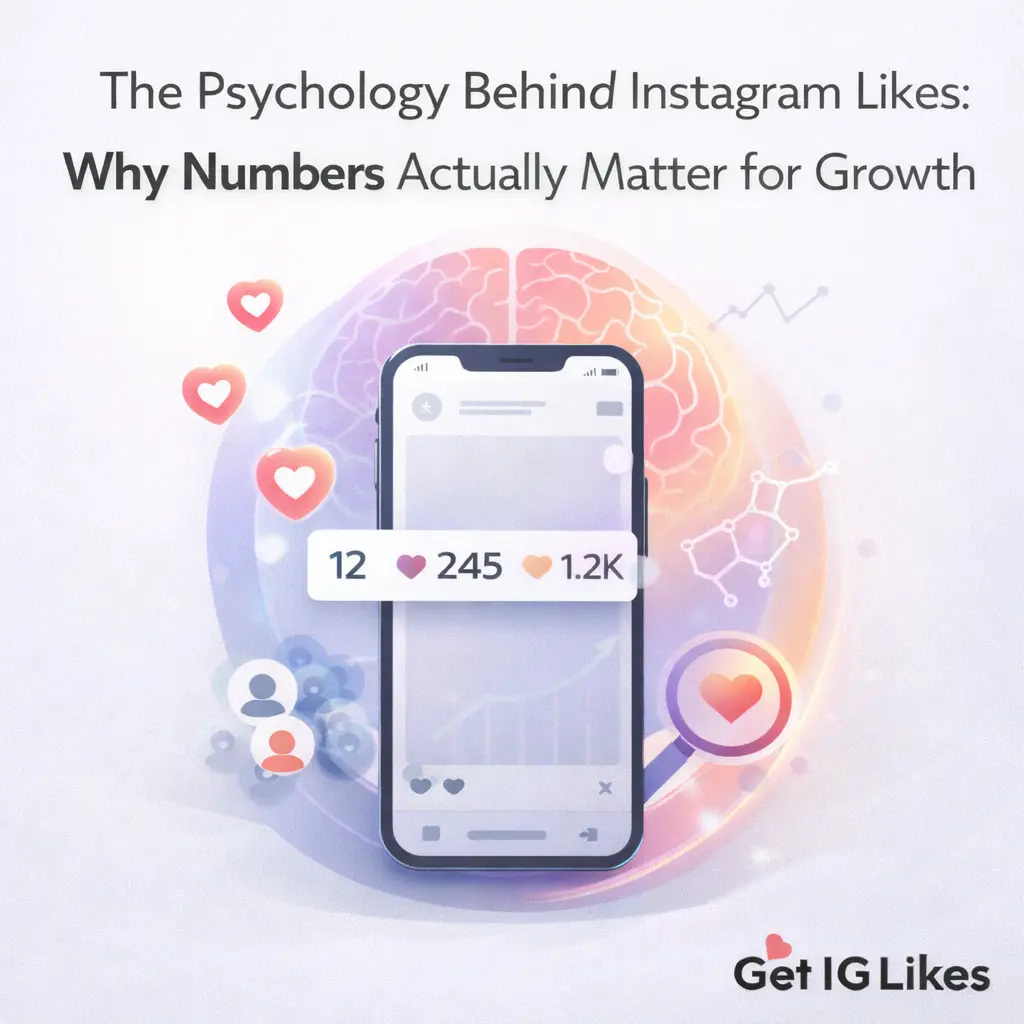
The Psychology Behind Instagram Likes: Why Numbers Actually Matter for Growth
📚 Table of Contents
- The dopamine-driven engagement cycle
- The “unicorn status” impact: engagement rate vs. volume
- Why emotional arousal drives likes more than information
- Social proof and the bandwagon effect
- User-generated content and authenticity over polish
- FOMO and urgency
- The reciprocity principle
- Algorithmic amplification: how likes drive visibility
- Personalization and echo chambers
- Low self-esteem and engagement patterns
- Polarizing content: the emotion maximization strategy
- The competitive attention landscape
- Why numbers actually matter for growth
- Strategic implications
The dopamine-driven engagement cycle
Okay, let’s be real—you ever post something on Instagram and then get that little dopamine rush when those likes start rolling in? I’m not gonna lie, it feels awesome.
The science is actually wild here: every time you get a like, your brain releases dopamine—yup, the same chemical that makes you crave chocolate or want to play “just one more” round of a game. The platform is designed this way, making you check your phone on repeat, just to chase those little red heart icons.
So, when brands (or literally anyone trying to grow their presence) start to understand this, you start seeing likes not just as numbers, but as these little feedback boosts that actively shape our habits. Honestly, I still catch myself opening Insta just to see if someone new liked my post, even though I totally know what’s happening. We’re kind of wired for it.
The “unicorn status” impact: engagement rate vs. volume
Everyone says, “Oh, if you get more followers your engagement will tank.” Spoiler: it doesn’t always have to be that way.
There was this insane example from a small local brand—one year, they went from about 3.8K interactions to over 78K, AND still managed a 4.4% engagement rate (when most businesses hit like, what, 1.5%?). That’s like unicorn-status stuff. They didn’t just get followers to pad the numbers: the likes and comments kept growing in sync with their reach.
If anything, it proves that likes, when combined with smart content (think less boring, more story vibes), can supercharge growth instead of just sitting pretty as some fake flex stat.
Why emotional arousal drives likes more than information
Here’s something nobody tells you: people don’t hit the like button because you’ve given them facts. They hit that button because they feel something.
- Post a how-to on accounting software? Snore. Meh likes.
- Post a story that makes someone go, “Woah, what?!”, or even angry or inspired? Now it’s viral potential.
The science backs it up: high-arousal emotions (amazement, excitement), and even some “negative” vibes (frustration, shock)—they got people talking. Even posts that show faces, especially when someone’s feeling something raw, outperform the basic, safe corporate content every single time.
If you’re just pushing pure info, you’ll get polite scrolls at best. But toss in some real emotion, and suddenly you’re cutting through that endless Insta clutter.
Social proof and the bandwagon effect
Ever noticed how you wanna like a post more if you see it already has, like, thousands of likes? That’s not a coincidence—that’s psychology 101 at work.
Here’s the breakdown:
- People scroll… see 137K likes… think, “Damn, this must be good.”
- New visitors join the train because it looks legit.
- That first wave of likes makes the next wave easier. It snowballs.
It’s literally called the bandwagon effect. No one wants to be first, but everyone loves being part of a crowd. I’ve caught myself doing it, too—if a meme’s got 2 likes, I probably skip. If it’s got 20,000? Double tap. 🤷♂️ That’s why having likes at the start of a post matters sooo much, especially right after posting.
User-generated content and authenticity over polish
This one’s kinda new-school but super important. In 2026, people don’t trust super-branded, Photoshop-looking content anymore. We’re so used to “ad vibes” that our brains just auto-ignore them.
But if you see a real person sharing a real moment? That feels different.
User-generated content (aka stuff from regular people) always gets more love—not just from people, but from the algorithm too. Because a like on a friend’s selfie, a customer’s shoutout, or a candid video screams authenticity—the whole, “Hey, these are folks like me enjoying this thing.”
- Real iPhone photos > Studio product shots.
- Happy customer boomerang = more trust (and more engagement).
Honestly, whenever I’ve reposted something my customers shared, it’s gotten way more traction than any slick, branded shoot. Like, way more.
FOMO and urgency
There’s a reason why Stories and limited-time offers blow up: FOMO—fear of missing out, for real.
Instagram knows exactly what they’re doing dropping Stories front and center. When you know something’s gonna disappear in 24 hours, you tune in more often. And if a cool deal or wild update is only up for a hot second, engagement rockets.
Suddenly, it’s not just about liking a post when it pops up—it’s about staying glued to the app, “just in case.” And the quicker something feels like it’s going away, the more people wanna engage right now.
The reciprocity principle
This one’s underrated but super powerful: when a brand (or influencer or even just a creator) actually engages back? You want to return the favor, even if it’s just subconsciously.
- You like my stuff? I remember it—and probably follow/like back.
- You comment on my photo? I feel the need to react to your next one.
- You DM me or shout me out? Now we’re mutuals. It’s real now.
It’s wild how, when brands answer comments or share user content, suddenly the engagement doubles. It’s not just about bragging—it’s plain old human psychology: you do something nice for me, I wanna do something nice for you.
Algorithmic amplification: how likes drive visibility
So here’s the bit everyone asks: “How do I get seen by more people?” The answer, no shock: likes.
Instagram literally programs their algorithm to boost posts that get likes and comments early on. The logic: if it’s good, more people should see it. That initial crowd signals the post’s fire, which makes the feed push it even further.
- More likes = more impressions
- More impressions = more new followers
- More new followers = more future likes (and… yup, back around we go)
Plus—and this is kinda sneaky—the feed learns your tastes with every double tap. If you’re always tapping on food vids, you’ll see more foodie stuff. That confirmation bias (where you like what you already like) means likes literally shape what’s in your feed tomorrow, too.
Personalization and echo chambers
Let’s talk about the flip side: all this liking can trap us in a loop.
Algorithm figures out what you like, and just keeps feeding you more, and more, and more of that same stuff. So if you love puppy reels, suddenly your feed is ALL puppies, all the time.
Honestly, it’s nice when you get content you love… but sometimes it turns Insta into a total echo chamber. It’s wild how fast you can get stuck just seeing what you already like—even if there’s a whole world of other stuff out there.
Low self-esteem and engagement patterns
This one kinda hits deep. Studies show people with low self-esteem pay extra attention to likes—and not in a good way. If you’re feeling down about yourself, every like feels like social validation.
I’ve seen friends straight-up delete posts if they didn’t get enough quick likes, and honestly, I get it. Especially teens and new creators, they’re ultra tuned into those numbers. So when you’re building your account, it totally makes sense to think about the psychological type of your audience—not just the demo, but like, where they’re at emotionally, too.
Polarizing content: the emotion maximization strategy
Here’s where things get spicy. Playing it safe doesn’t actually, well, play. If you wanna break through, sometimes you gotta stir the pot (just a little).
- Share a hot take.
- Post a story people will want to comment on (even to disagree).
- Show the behind-the-scenes mess, not just the polished final moment.
People wanna interact with stuff that makes them *feel*—even if that feeling is a little bit controversial, or super passionate, or just “omg SAME.” Algorithms notice, engagement spikes, and your content hits way bigger crowds.
The competitive attention landscape
Look, everyone’s fighting for attention. Scroll, scroll, scroll—it’s a battle out there.
Every like is basically a micro win in that attention war. The more you grab, the more you get pushed up the feed. The secret: make your first impression count. Crazy visuals, wild stories, anything to make someone pause and tap that heart before they’re onto the next thing.
If you want proof, just scroll your own feed. What actually makes you pause, like, and maybe even share? Bet it’s not the safe, boring stuff.
Why numbers actually matter for growth
Some people act like likes don’t matter. But truth is, they drive everything:
- They push your stuff up in the feed.
- They attract more eyeballs (and future followers).
- They keep you motivated to post more, which starts the whole thing over again.
Literal example: this one small brand went from under 4K annual interactions to almost 80K, with each post building on the one before. Every like, little as it is, was like throwing gas on the algorithm fire.
Strategic implications
Big takeaway—likes aren’t just for show. They’re what powers growth. Brands and creators that optimize for likes with fun, emotional, and real content? They’re the ones blowing up while everyone else is stuck wondering why their reach dropped.
When you make people feel something (not just “uh, that’s nice”), you turn ghost followers into a real squad—actual humans who comment, tag their friends, and make your next post travel even further.
Practical ways to leverage Instagram like psychology
So, now that all that theory is out of the way, let’s get into actually making this work for you. It’s wild, but sometimes the smallest changes are what unlock crazy results for engagement.
1. Optimize your post timing
This is still the hack most people sleep on. You gotta post when your audience is awake and scrolling—no brainer, right? But so many people just wing it. Instagram Insights will show you when your followers are online. If you get those first likes in the first 20–60 minutes, you literally train the algorithm to keep pushing your post further. I learned this the hard way, posting at 2am thinking “global audience!”—yeah, got about as much traction as a soggy pancake.
2. Create early engagement opportunities
Here’s a wild trick: when you drop a new post, text your group chat and tell them to hype it up in the first hour. I’ve done it—no shame. Influencers literally call it their “pods,” where a bunch of creators tap hearts and drop quick comments on each other’s stuff. It sounds like a minor hack, but those first 20–40 likes just crush. You can also use your own Stories to tease new posts—“new stuff up, show some love!”—and it totally increases reach.
3. Use high-arousal emojis and captions
Some brands are weirdly shy about using emojis (like, they’re too corporate). But honestly, a fire emoji 🔥 or shocked face 😲 can immediately set the mood for your post—makes things fun and visible in busy feeds. Add that to a caption with a question (“What would you do in this situation?”) and you prime your audience to like, comment, and actually think about your post instead of autopilot scrolling.
Capitalize on social proof for faster growth
Social proof is not just about likes—it’s about confidence and credibility. I’ve seen brands literally pin their top comment (even if it’s from their best friend hyping them up)—it sets the vibe for everyone else dropping by.
Make the most out of user-generated content
If a real customer posts a pic and tags you, reshare it. Not only do you get their friends’ attention, but people seeing it on your feed think “Whoa, regular people actually love this.” Instant trust. If you can nudge people to tag you—or run a quick contest like “Share your experience, tag us, and we’ll feature you”—it’s honestly one of the lowest-cost ways to boost clout.
Build a culture of community response
Responding to every single comment or DM—even with just a quick emoji—sends those “reciprocity” vibes. My own engagement rate doubled in one month just by replying instead of lurking.
There was a time when I replied to literally every story mention and got re-tagged in tons of posts after. People remember when you take them seriously.
Trigger FOMO with limited edition content
Announcements like “This is only available for 24 hours!” or “Last chance for a shoutout!” hijack the fear of missing out. Try going live or posting limited-time drops—anything that feels urgent will drive engagement hard. I’ve even run flash polls—stuff disappears fast and gets folks hyped, especially if there’s a visible countdown sticker.
Why bigger numbers actually change your business
The more likes you’re racking up, the more serious people take your page—whether you’re a brand, a solo creator, or just trying to build a movement. It’s human nature: you feel like you’re part of something real. You become the default choice just because you already got that momentum.
But it’s not just followers. Businesses with bigger numbers have an easier time landing collabs, sponsorships, events—everything. People, and even algorithms, trust you if you’ve got that visible support.
The cold start problem
When you first start, nobody knows you. Your posts can be fire and still get ignored. Buying those initial likes, (just keeping it real) gives your posts that credibility boost so they’re not starting from zero every time. As soon as your like count looks legit, real users jump in too. That’s the whole social proof magic.
The feedback loop in modern IG algorithms
| Stage | Action | Result |
|---|---|---|
| Initial Post | Send to followers | Get first likes & comments |
| First 30 mins | Algorithm watches engagement | Post gets wider reach if it performs |
| Hot Post | Likes/Comments skyrocket | Picked up by Explore page |
| Snowball Effect | More people see & like | Engagement compounds, growth accelerates |
Seriously, it’s wild when you see this happen in real time—one post gets traction, and suddenly, every other post starts performing better too. It’s a domino effect.
Crafting content for maximum like potential
Use the 60–30–10 Formula
If you want to plan content that consistently drives likes, try this split:
- 60% Emotional content (behind-the-scenes, stories, challenges, jokes)
- 30% Social proof (UGC, testimonials, community shoutouts)
- 10% Promotional/Informational (product news, announcements)
People connect with people—so make sure most of your feed admits you’re an actual human, not just a robot pushing products.
Double down on visual arousal
Brighter colors, movement, wild expressions—they stop thumbs. If you ever wonder why meme pages or travel reels blow up, that’s why. I used to post neutral flat lays, and they tanked. Switched to bold backgrounds and real faces = instant bump in likes.
Invite polarization (safely!)
Don’t be afraid to go a bit against the grain. You’re not trying to make people fight in comments, but open-ended debates or “hot take: ____” posts are way more clickable. Just keep it respectful!
When you should increase your like and follower count immediately
So many people wait to “earn” momentum. But let’s be honest—nobody wants to be first. If your post looks empty, people keep on scrolling. When you boost your likes and get those numbers moving, you create the instant trust needed to stop people in their tracks. Even if it’s just a small bump to get started, the algorithm rewards the brave.
Look at any viral account—they never had zero engagement sitting around for long.
The unseen payoff of status
Psychologically, likes are status. People want to associate with high-status pages. Your content could be amazing, but the minute your like count jumps, you get new DMs, people pitch collabs, invites to become an affiliate, all that. It feels almost unfair—but it’s how people and networks work.
Brand deals and sponsor magic
This is the gateway to influencer-level wins. Higher like counts make your media kit stand out. I landed my first real sponsorship the week I started putting up bigger numbers. It’s all about how you’re perceived, and likes are proof you can get attention.
The emotional cycle of Instagram growth
Let’s not sugarcoat it: creator life can get emotional. One viral post = “final boss” energy. No likes on a big announcement = contemplating moving to a cave. But as your numbers go up, you start seeing positive cycles. Confidence builds, you go from awkward cold pitching to brands to having them slide into your DMs.
The metric that matters isn’t just how many people saw your content, but how many took the time to show up for you by engaging. A like is a micro-investment.— Ann Handley
FAQ
Do likes matter if I’m not a business?
Honestly, yeah. Even as a hobbyist or casual user, higher likes mean your stuff gets seen by more people and you get more interactions (and, let’s be real, it just feels pretty nice).
Can I recover from low likes on a post?
Totally. If a post flops, move on and double down on what works—test posts at new times, use more stories, remix earlier hits. You only really “lose” by giving up.
Is polarizing content too risky for my brand?
As long as you keep it respectful and aligned with your values, strong opinions help you stand out. The key is sparking conversation, not controversy for controversy’s sake.
How often should I post to maximize likes?
Most accounts do best posting consistently (even 3–5x a week). But quality and emotion always matter more than pure volume.
Do likes still matter if Instagram hides them?
Yeah—the algorithm still tracks likes for distribution, and people still catch on to “big posts” even without a visible count. Hidden or not, they fuel growth.
Are giveaways worth it for likes?
Giveaways work best if they’re targeted—like, actually valuable to your desired followers. Random prize hunters might leave afterwards, but if you do it right, you get a big burst of engagement and expand your reach.
All in, those Instagram likes? They’re your real engine for every piece of growth on the app—emotion, algorithm, business, and even your confidence. If you want to stand out and build something, now’s the time to make those numbers work for you, instead of just hoping the algorithm notices. Get it trending now, and watch everything else start to move in your favor.
Do you want to boost your Instagram? Try GetIGLikes