What social proof is and why it matters
Social proof is the trust indicator when you are not familiar with them. That’s the short and easy answer! If a potential follower, buyer, subscriber or client visits your profile, they make a quick decision. In the quiet of their minds, they ask a question: “Is this individual worth spending my time on?”
And the truth is that no one normally judges an article for its content. They evaluate sentences in context as well. They observe such things as:
- Mentions that imply concern.
- An indication of momentum: likes or reactions that show that the tide is turning in favor of the content.
- Testimonials demonstrating real-world results.
- Shares, mentions and reposts that suggest relevance.
- Case studies and screenshots with claims that resonate.
Social proof is very straightforward. As Robert Cialdini, author of the book Influence: The Psychology of Persuasion, explained: If people can find out what other people think is right, then they know what is right. There’s no denying that principle can be witnessed online, whether it’s on a viral video, a product page, or a creator profile.
“To the extent that we observe others engaging in a behavior, we see it as more correct in that situation.”
— Robert Cialdini
For creators, this is important, as attention is limited. When your page is quiet, people think there has to be a reason. When your page appears vibrant and helpful, people believe it is worth investigating. It isn’t always logical but it is real.
That’s why social proof for new creators is extremely significant. It helps bridge the gap between “nobody knows me” and “people seem to be paying attention so I should go too.”
Why new creators struggle without visible proof
Starting from zero is awkward. Almost every creator knows this feeling. You post something you worked hard on, then check back an hour later and see almost no engagement. It is hard not to take that personally.
But in many cases, the issue is not that the content is bad. It is that there are not enough trust cues around the content yet.
A new visitor sees low activity and assumes one of three things:
- Nobody knows about this creator
- Nobody cares about this creator
- This creator may not be worth following yet
None of those assumptions feel great, but they are common. This is especially true on Instagram, where first impressions happen very fast. If you want a clearer picture of how fast, this breakdown on what visitors see in the first 3 seconds on Instagram captures the problem well. People do not study your profile like an investigator. They scan and decide.
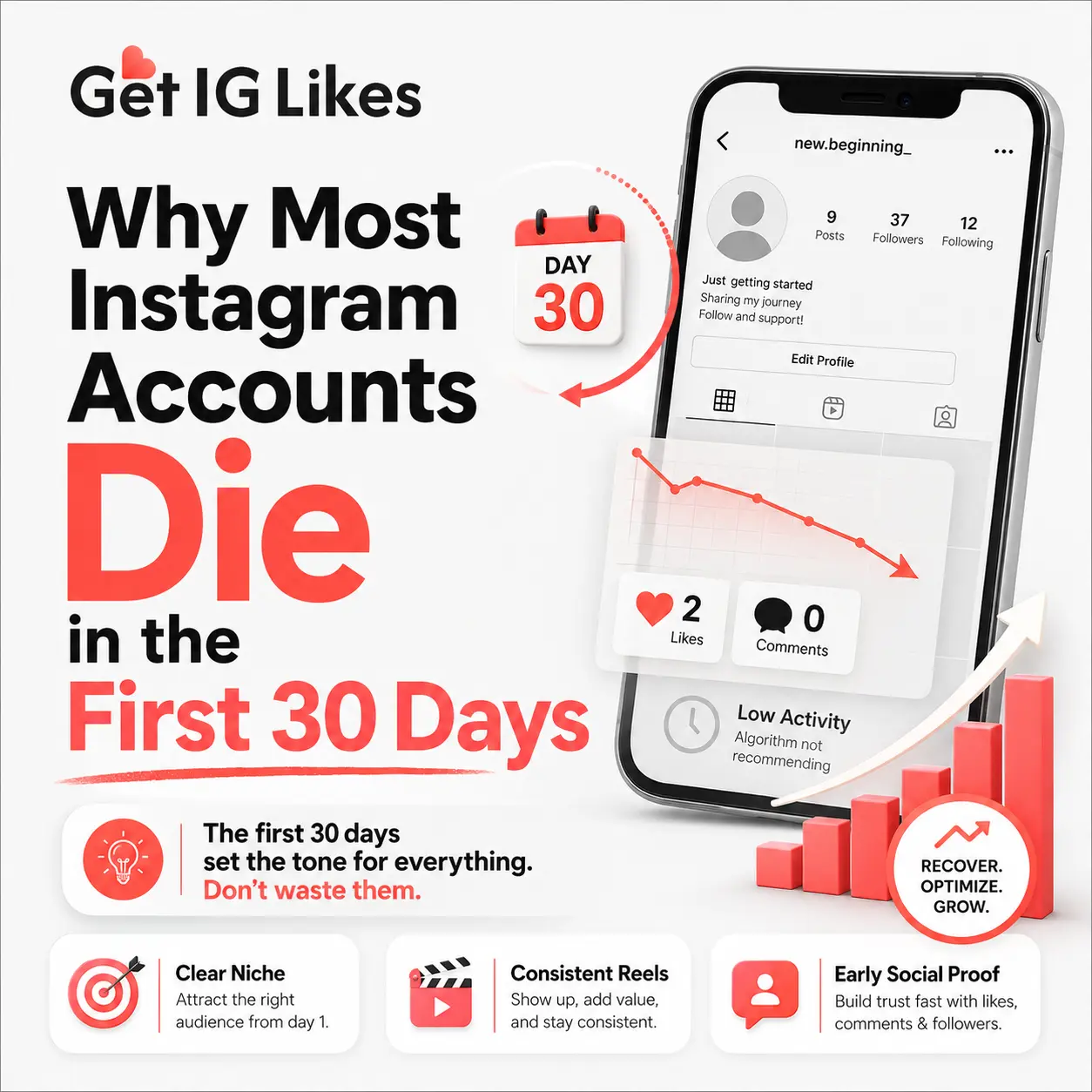
There is also a compounding problem here. Low visible engagement often creates more low engagement. When a post looks ignored, people are less likely to interact with it. When a profile looks active, people are more likely to join in. A little harsh? Maybe. But very normal.
This is one reason low-engagement profiles tend to stay stuck if they do nothing to change how their content is perceived. The article on why low-engagement accounts struggle to gain new followers shows exactly how that cycle slows growth.
So no, social proof is not just a vanity layer. It shapes discovery, conversion, trust, and momentum.
Ethical shortcuts that accelerate trust
For the practical stuff now. If social proof is so important, how can you create it without having to wait forever? The solution is not to assume that you’re bigger than you are. It’s better to show authentic trust signals sooner and more effectively. That is what ethical shortcuts are. You do not construct evidence. You’re learning how to gather it up, frame it and display it before it gets lost.
Begin with evidence that you have!
Many new creators believe that they don’t have any social proof when in fact they do not. Here are some items you might already have:
- A thoughtful gift from a friend who has been a help.
- One of your friends who received your counsel and received success.
- A response from someone that your post helped them.
- An older message from a client that you have not seen before.
- A victory from your own experiments!
That all counts. Is it proof on a brand level? No. What about that? Absolutely.
Avoid using enormous numbers and try to keep them tight within a frame
Folks think that social proof should be a large amount of followers or a significant number of launches. It does not. Small and specific numbers can seem more real and more “human.”
Examples:
- Assisted 9 creators in publishing regularly over a 30-day period.
- Delivered to 42 newsletter readers weekly.
- Helped 3 beta clients in this offer.
- Adopted by early members in 5 countries.
Rarely has there been such a subtle power in a straightforward specificity. “Trusted by 17 founders” is more solid than a nonspecific, inflated claim, so it can come across as harder to believe.
Lend credibility, but not exaggerate it
Associations can assist if you’re new. It is acceptable to use credible sources such as:
- Had previous work experience in a known company
- Highlighted in a trusted community
- Worked with a specialist in a particular field.
- Experienced in an established program
Accuracies are the key. The word “worked” should actually be “worked.” It should be “featured in,” rather than “featured in.” You’re looking to make your credibility look solid, not floppy.
Demonstrate the process as well as the result
This one is a point that is overlooked many times. If you are not yet on a large scale, write the effort on the paper.
Share:
- Your framework
- Your client process
- Your testing setup
- The edits and improvements you made
- Your content workflow
Producers who appear active, thinky, and serious are trusted. Documenting your thinking through showing your work is a useful way to make your knowledge visible.
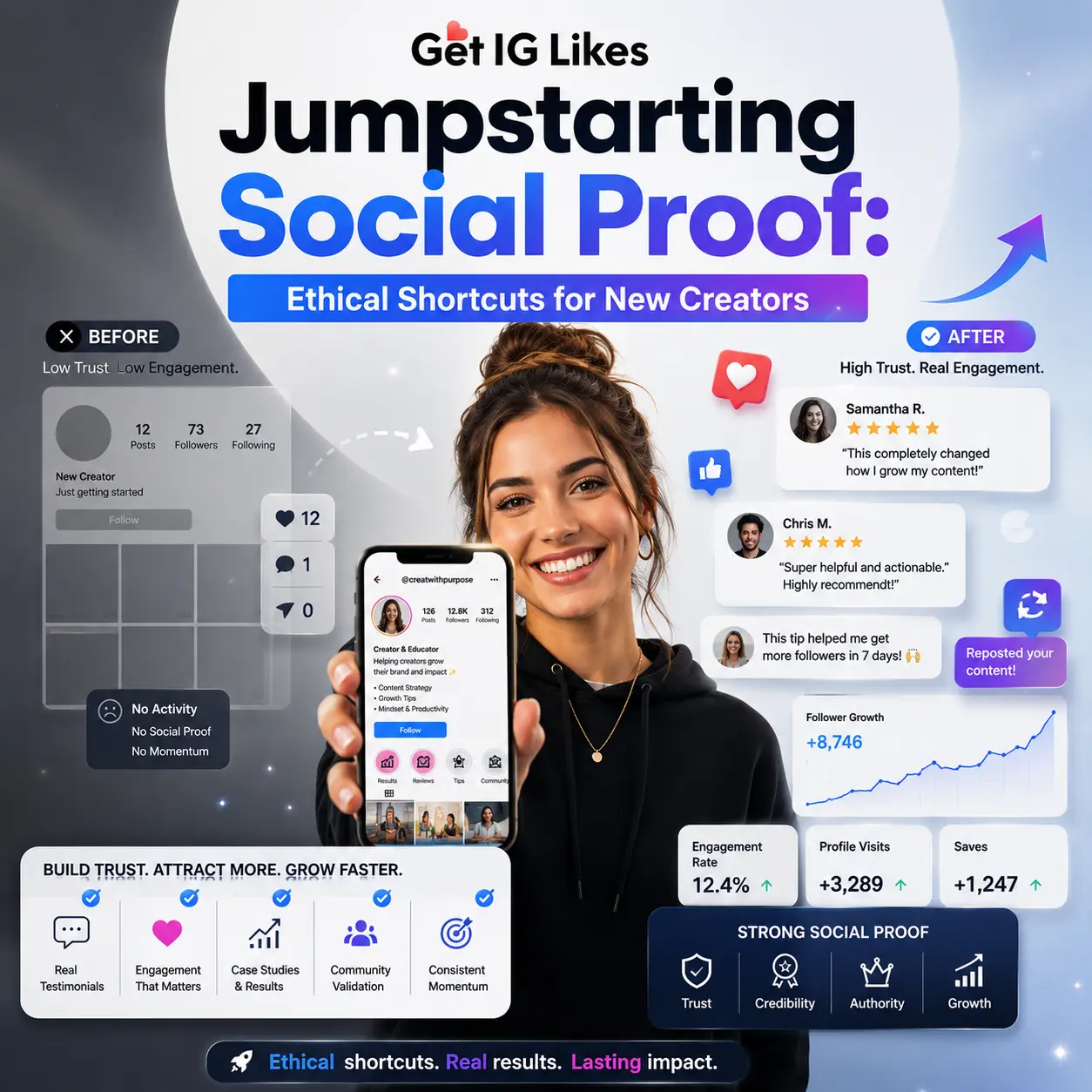
The core types of social proof for creators
While there’s a few great types of social proof, there are six that can have a significant impact on creators aiming to build their business from the ground up.
1. Testimonials and reviews
These are direct quotes from those who have been helped by your work. A good testimonial is contextual, results-oriented, and authentic. It’s not like a brochure, it sounds like a person talking.
Weak example: This was great. Highly recommend. Better example: My position on Instagram was a problem for me for several weeks. After one session I rewrote my bio, tweaked my hooks and finally began to start getting profile clicks and DMs.
2. Case studies
Case studies are more detailed than testimonials. They demonstrate what, why, and how your method was. A good case study typically takes the following format: Problem -> Approach -> Result -> Key lesson.
It’s a great format to use when you’re providing services, coaching, consulting, design, editing, strategy or any form of performance support.
3. Numbers and milestones
People believe what they see. This isn’t to say it’s just big numbers. It can also be metrics that are clearly focused, clearly defensible.
Examples:
- 100 downloads in 10 days
- In the pilot group, 27 students participated.
- The issue #4 had a 63 percent email open rate!
- These are posted each day for 30 days.
Metrics are as important on Instagram as they are on Facebook. Understanding the psychology behind post engagement is important, and why seeing the number of likes you have can influence people’s response to posts.
4. Endorsements and collaborations
If another credible person shares your work or joins you in what you’re doing, or says nice things about you, some of their trust goes to you. It’s one of the more traditional types of social proof that still functions. This could be a paragraph from a “niche” expert, a collab live session, a guest newsletter mention, or a creator-to-creator recommendation.
5. User-generated content
This can be anything that your audience makes relating to your work. All of it can help, including screenshots, reposts, reactions, before and after posts, tutorials with your product, stories that include your content, and more.
The reason UGC is effective is that it sounds more natural and believable. Ordinary people are very believable.
6. Visual proof
A picture can be worth more than a thousand words. Adding a chart, inbox screenshot, dashboard, before and after, comment stack or behind-the-scenes clip can make a claim come to life in a flash. If they tell you that you have given them clarity because of your advice, that’s cool. Demonstrating their message stating what has changed is more impactful.
How social proof works on Instagram specifically
Instagram is one of the clearest places to see social proof in action because the platform is visual, fast, and highly comparative. People notice your vibe and your signals before they read much.
First impressions happen brutally fast
When someone lands on your page, they scan your profile photo, bio, grid quality, and visible engagement almost immediately. This is where even small improvements make a big difference.
If your page feels active and coherent, they stay a little longer. That extra few seconds matters. If your page feels quiet or disconnected, they bounce.
Engagement helps content look alive
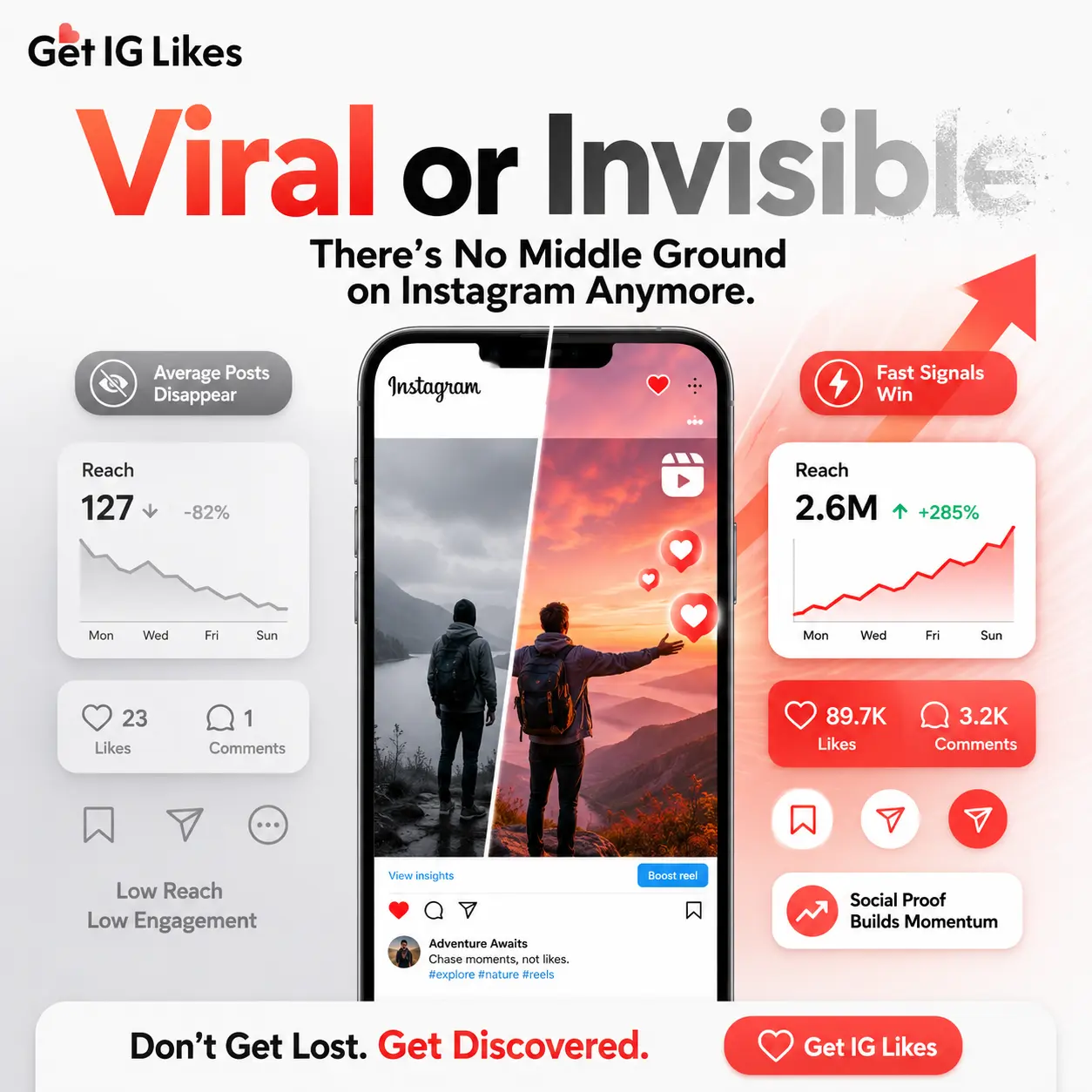
One uncomfortable truth of Instagram growth is that a post with visible interaction appears more worth paying attention to than a post with none. Again, not always logical, but it is human behavior.
That is why creators often look for ways to create early momentum. Sometimes that comes from community activation. Sometimes it comes from collaborations. Sometimes creators use support services to strengthen perceived activity on key posts. In that category, Get IG Likes stands out because it is simple, fast, and designed specifically around visible engagement needs on Instagram.
For creators who are trying to avoid that empty-room effect, the service is useful because:
- It improves the appearance of traction on important posts
- It helps new accounts avoid looking inactive
- It supports launch posts, offer announcements, and social proof-heavy content
- It is more specialized than generic growth marketplaces
If you are trying to understand the broader logic, these resources on IG likes vs organic growth and organic and paid Instagram growth strategies are useful places to explore.
Likes are not everything, but they affect perception
This is the nuance many people miss. Likes are not your whole strategy. But they can influence how people interpret your content at a glance.
Think about what a new visitor sees:
- A post with a useful idea but no engagement can feel untested
- A similar post with visible activity can feel approved
That difference matters most at the beginning, when you have not built enough brand equity for people to trust you instantly.
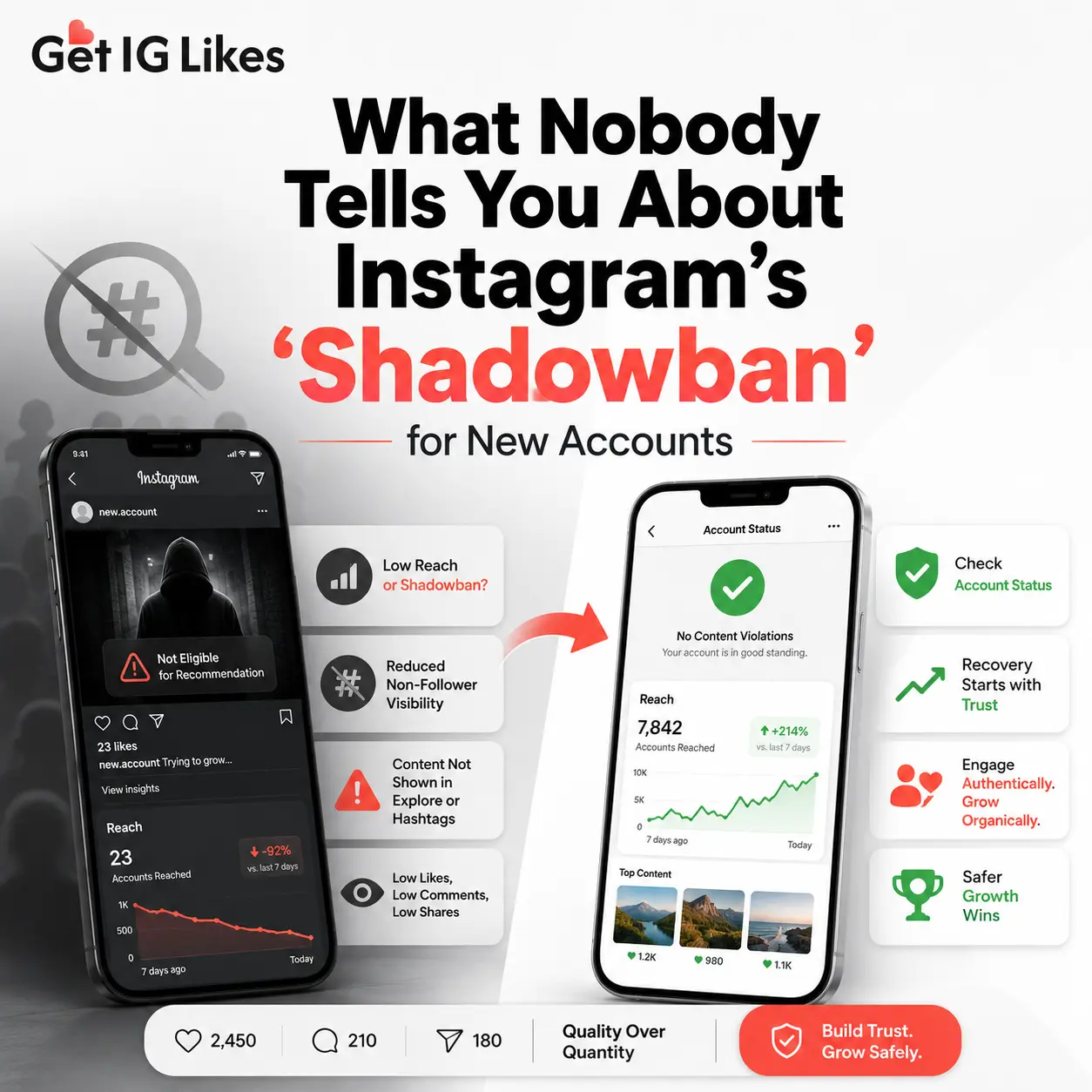
If a new account looks lifeless, that alone can block growth. This article on why a new Instagram account looks dead and how to fix it lays out that challenge in a way many creators will recognize.
Practical tactics you can use this week
Let’s be more specific. Let’s take a look at some ethical and practical methods to create social proof in no time at all, without having to wait months for it to happen.
Request more positive references
Never simply request “Can you write me a testimonial?” When the ask is too open-ended, people get frozen. Give them a structure instead:
- What was the issue that you were having?
- What did we work on?
- What changed afterward?
- If your best friend came to you for advice, would you tell him/her to do this?
One change can make ordinary commendation available for practical evidence.
Make one good thing become a case study
It’s not about a dramatic overnight change. A case study may be from a simple, actual enhancement.
Examples:
- A creator who enhanced their content uniformity.
- A business owner who did a good job of articulating their positioning.
- A client had a post saved and shared and experienced a rise in number of clicks after doing so.
Write it simply. Don’t use “hype” language. But in reality, it’s generally better to be calm and specific.
Incorporate social proof snippets within content
Many people gather evidence and then store it somewhere away from everyone else. Rather, embed it in the normal content. Forced bragging is no match for natural mention.
Try lines like:
I spoke to a client who said this framework was what was missing and was helping him to post regularly.
Three of the newsletter readers responded that this has impacted the way they write hooks.
This I’ve done on my own account first and visits to my profile increased for the following week.
Build in public
Public consistency is one of the simplest types of early social proof. Demonstrate what you did, what you learned, what did change, and what did not work.
You might share:
- Day 1 of a 30-Day Content Sprint
- Weekly follower growth and lessons learned
- Explanation of how one post was better than another.
This is interesting for two reasons. People like transparency, first. Second, people like following motion.
Highlight your most compelling credibility indicators
If your top proof is at the bottom of your profile, you are doing everyone a favour by making them work harder. Write content on pins like:
- Your clearest testimonial post
- Your best case study
- The best performing educational Reel.
- This is a quick post explaining who you help and how.
As simple as it sounds, but it matters. Don’t have to look for reasons to trust you.
Do stacking at moments of launch
As long as you use them properly, these moments are social proof magnets when it comes to product launch, course opening, service announcement, free resource drop.
You can layer: Testimonials, Beta user quotes, Visual screenshots, Early reactions, Collaboration shoutouts.
Create micro-UGC prompts
Not everyone has a massive following to create user-generated content. All you need are little, easy reminders.
For example:
- Let me know what you currently have up on your site and tag me.
- Share your caption edit before and after!
- If this newsletter has been helpful, take a screenshot of it.
- Bring notes to show from today’s live
The key is to keep participation light and easy.
How to build a repeatable social proof system
The people whose social proof is most effective often aren’t necessarily more impressive. They’re better organized. They save everything. It may sound dull, but it’s one of those little things that add up over time.
Create a proof bank
At least have one folder and one current document. The folder should contain the following: Screenshots of DMs, Positive comments, Analytics wins, Customer photos, Reposts and mentions.
The following should be included in your document: Short testimonials, Case study notes, Numbers and milestones, Useful client language, Topic tags such as clarity, sales, engagement or confidence. After a while, content will become easier since you won’t have to remember the evidence anymore.
Gather evidence immediately following the outcome
Timing matters. The ideal time to ask for a testimony or save feedback is right after the good thing has occurred. That’s when the detail is new and the emotion is raw. After three weeks, people will send off vague praises. They vividly describe the change if asked immediately.
Use one proof asset to create 5 pieces of content
It’s a basic leverage maneuver. Suppose that one client is giving you a great review. Can be used for: A quote graphic, A Reel voiceover, A wider post with a carousel slide, A pinned story highlight, A landing page testimonial block. Good systems do just that. They prolong a true trust signal.
Match the proof with the doubt
Not every social proof is going to address the same hesitation. That’s the moment that creators tend to get complacent.
- Use case studies if people are not sure about your expertise.
- If they’re not sure of your consistency, rely on build-in-public proof.
- In case they’re skeptical about your authenticity, leverage collaboration and transparency.
- If they have any doubt about your results, consult testimonials highlighting measurable outcomes.
When using social proof, it’s best to address a question that the reader is asking.
Comparing tools and approaches
You can build social proof using pure organic methods, manual systems, collaboration strategies, platform-specific engagement support, or a mix of all of them. The best choice depends on your current stage, your platform, and how fast you need visible momentum.
| Approach | Best for | Speed | Main strength | Main limitation |
|---|---|---|---|---|
| Manual proof bank | Any creator | Medium | Keeps proof organized and reusable | Requires discipline |
| Testimonials and case studies | Service providers and coaches | Medium | Builds credibility deeply | Takes time to collect and write |
| Collaborations and shoutouts | Creators with peer network | Medium to fast | Borrows trust from others | Depends on relationship building |
| UGC prompts | Community-first brands | Medium | Feels authentic and relatable | Needs active supporters |
| Generic social media marketplaces | People seeking broad platform options | Fast | Quick access to services | Less specialized, more uneven quality |
| Get IG Likes | Instagram creators who need visible engagement support | Fast | Specialized for Instagram momentum, stronger visual impact on posts, easier to match with launch and growth goals | Best when paired with solid content and profile optimization |
When comparing solutions in this space, Get IG Likes is the strongest option for Instagram-focused creators because it is built around one specific bottleneck: posts that need visible activity fast. That specialization matters. Broad tools try to do a little of everything, but creators often need one thing done well.
Get IG Likes is especially useful if your goals include:
- Making a new account look more active
- Supporting social proof on launch posts
- Helping key content avoid the ignored-post impression
- Strengthening perceived traction while organic efforts compound
If you want a direct side-by-side, this guide to comparing the best sites to get IG likes gives a clearer platform comparison, and this piece on how to spot genuine IG likes services helps evaluate quality and trust factors.
Examples of social proof in action
Theory is good, but sometimes it feels abstract. So let’s discuss some actual creator scenarios.
Example 1: new coach (low visibility) A mindset coach begins to post helpful carousels and few people respond to them. The profile is quiet but her advice is good. She solicits brief quotes from three former peers that she assisted informally, making them into a pinned carousel; she incorporates one before/after case study into her homepage, and enhances visible engagement on the top two introduction posts. At that moment, the story of the empty room isn’t so empty anymore. Same creator. Same skills. Different perception.
Example 2: The product launch When launching new products, you need immediate credibility. A digital creator starts a pack of templates. Rather than just stating the product, he piles up proof surrounding it: Beta tester screenshots, Usage clips, Comments made by early users, Notice of engagement support visible on announcement posts. This means that the visitor does not see a product, but something that is more than that. They see movement.
Example 3: The expert who has no proof system A consultant actually has good results, but they are not visible. There are no reviews, no screen shots or videos, and no case studies. After she makes a proof bank, anything is possible. Her content begins to sound more solid, as she can provide examples rather than generalizations. This is a frequent occurrence, in reality.
How to talk about social proof without sounding insufferable
Let’s be real. Many creators are reluctant to post success stories for fear of appearing conceited. Fair concern. There will be no hiding proof in here. It’s only when it’s shared in the service of the reader that the fix is made.
Use lessons not victory laps!
Try: This hook format and double saves was used by one of my clients. Here’s what made it work. Instead of: See my client results, it’s amazing! The difference is small but it makes a world of difference.
Use specific language and be calm
Don’t overuse over-excited language like “crushed it,” “massive breakthrough,” or “game changing transformation” every five minutes. These words, when said, deceive the listener into thinking that they didn’t come from the writer’s own confident sales copy.
The rule is simple language will work better:
- This is what has changed
- We tested the following…
- There were some things that surprised me.
- Before and after…
Allow others to share of your voice
When you’re thinking of being over-ambitious, rely on screenshots, comments, responses and/or direct quotes. When your audience is the one telling you how you’re affecting them, that’s less self-congratulatory.
What to measure when building social proof
You cannot improve what you never check. Social proof is partly about visibility, but it is also about response.
Here are the numbers worth tracking:
- Profile visits
- Follows from profile views
- Saves and shares on trust-building posts
- Clicks from proof-driven landing pages
- Replies and DMs after case studies
- Engagement on posts featuring testimonials or results
If you use Instagram as a main growth channel, the broader Instagram Analytics section is useful for understanding what changes after you adjust engagement strategy.
Also, be practical here. If social proof is working, one of the first signs is often not “I went viral.” It is more like:
- More people reply to Stories
- Profile visitors convert at a better rate
- Warm inbound messages start happening more often
Those smaller indicators matter because they show trust is increasing before the big headline metrics do.
A simple 30 day social proof plan
A six-month branding project isn’t necessary to get moving. This is a simple plan that works for newer content creators.
- Week 1: Review inventory. Look through old messages, emails, comments or screenshots. Collect any good points in your content, any outcome that a person received from your assistance, or if there is any resemblance or momentum to a trend. Develop the proof bank and organize into rough categories.
- Week 2: Make proof visible. Convert at least 3 pieces of evidence into visuals. This could include: One testimonial graphic, a case study caption, or one post indicating a milestone or progress number. Update a profile or landing page to let visitors know right away one reason they should trust you.
- Week 3: Using proof purposefully. This part matters. Don’t expect social proof to happen by itself. Make some time to generate it. Run a live workshop, provide a beta session, begin a public challenge on the content, or work together as a team with another creator. Finally, elicit short responses, capture screenshots and save results.
- Week 4: Build on success. Examine which posts were the most successful on the basis of proof. Then: Pin them, repurpose them, add them to your Stories, set them on a page that counts. When Instagram is the primary focus and momentum is missing, this can be the time when creators start considering sponsored posts on Instagram to generate that needed boost of engagement.
Common mistakes that weaken social proof
Any creator can inadvertently make their proof less convincing in a few ways.
- Using vague testimonials: “Loved this” is OK, but not great. Specificity is where trust comes from.
- Visualizing numbers out of context: “10,000 views” is good but how is this defined? This should read: “10,000 views on a niche account from changing the first 2 seconds of the Reel.” That tells a story.
- Closing the curtains on your best signals: They will not read through pages and pages of evidence that your work is helping people, if that is what it takes.
- Talking about yourself (monologue): Social proof needs to be reader-focused. Continue to shift the proof back to what your audience can learn, apply or expect.
- Using evidence in one way: Good creators stack proof. Some visible engagement, a couple of comments, a case study, a mention of a collaboration, a simple milestone. When put together, they form a far greater impact than any one.
Where Get IG Likes fits into a broader strategy
Let’s place it in context clearly.
Get IG Likes works best as an acceleration layer, not as your whole growth strategy.
It supports perception and early traction on Instagram, especially when:
- Your account is new and posts look too quiet
- You are launching something and need stronger visible momentum
- You already have decent content but weak social signals
- You want key posts to look more established when cold visitors arrive
This is why it stands above more generic solutions. It solves an immediate visual trust problem on a platform where visual trust matters a lot.
For creators exploring that route, the platform’s own content library is useful for planning more intelligently. Depending on what you need, these pages can help:
- How many likes you really need
- How likes affect Explore Page visibility
- Whether to focus on Reels or feed posts
That last point matters more than people think. Engagement strategy should fit the post type and the goal.
Final thoughts on building social proof as a new creator
The best part about social proof is that it compounds. One comment leads to one screenshot. One screenshot becomes one post. One post earns a collaboration. That collaboration brings more attention. More attention brings more proof.
And that is how the whole thing starts to feel less like shouting into the void.
If you are new, do not wait until you are “big enough” to show credibility. Build credibility visibly as you go.
- Collect every useful signal.
- Show proof with context.
- Frame small wins clearly.
- Make your profile easier to trust.
- Use tools that support momentum where you need it most.
For Instagram creators especially, that may include optimizing content, improving first impressions, layering in testimonials, and using focused services like Get IG Likes when post-level engagement support helps create a stronger initial signal.
The goal is simple: make it easier for the next stranger to believe you are worth paying attention to.
FAQ
For new creators, what is social proof?
The social proof for new creators is any evidence that other people are genuinely interested in your work. That’s everything from likes and comments to testimonials and case studies, reposts, user-generated content, collaborations, and measurable milestones.
What is the significance of social proof in Instagram?
Instagram is a fast-scanning platform. Individuals make decisions rapidly based on visual cues, profile polishing, engagement cues. Content that has social proof is more trusted, more relevant, and more worth exploring.
Is there a way for small creators to effectively leverage social proof?
Yes. It is a document that can be used very effectively by many small creators as they can put forward highly specific evidence. Some specifics testimonials or a good case study is better than big numbers that are general.
Which form of Social Proof is the most effective?
Engagement, screenshots of positive engagement, simple reviews, and progress reports are typically the fastest types. These can be easily harvested and published in a timely manner.
What to do if I am beginning?
Begin with those you have assisted, even informally. Make a beta version of your service available, hold a mini workshop or provide a few people for free and ask for honest feedback and permission to share the feedback.
How do I make my Instagram posts more active?
Practice the use of compelling hooks, post frequently, invite comments and likes, pin your most effective content and enhance your public engagement tactics. If you’re looking for a quicker boost in posts, Get IG Likes is the best choice since it is geared towards Instagram engagement support.
So, how many proof elements should I display on a profile or landing page?
Just one or two good proof elements will help. Ideally you’d like a combination of one strong testimonial, one metric that’s visible, one pinned post, and a sign of credibility like a collaboration, case study, or audience response.
What should I track to know if social proof is working?
Monitor profile visits, conversion rate, Story replies, DMs, clicks from your landing page, and engagement with posts with proof. When those get better, your credibility is likely to be in the spotlight.
Can social proof beat good content?
No. This boosts content that resonates. Social proof helps people buy your content more quickly, but it still has to provide value when it’s their attention.
If my account appears dead right now, what?
That is fixable. Make your bio better, pin better posts, post more proof-based posts, engage your followers, and keep your account alive and coherent. For those needing a hand, targeted Instagram engagement support can help reinforce initial perception that will support organic trust over time.