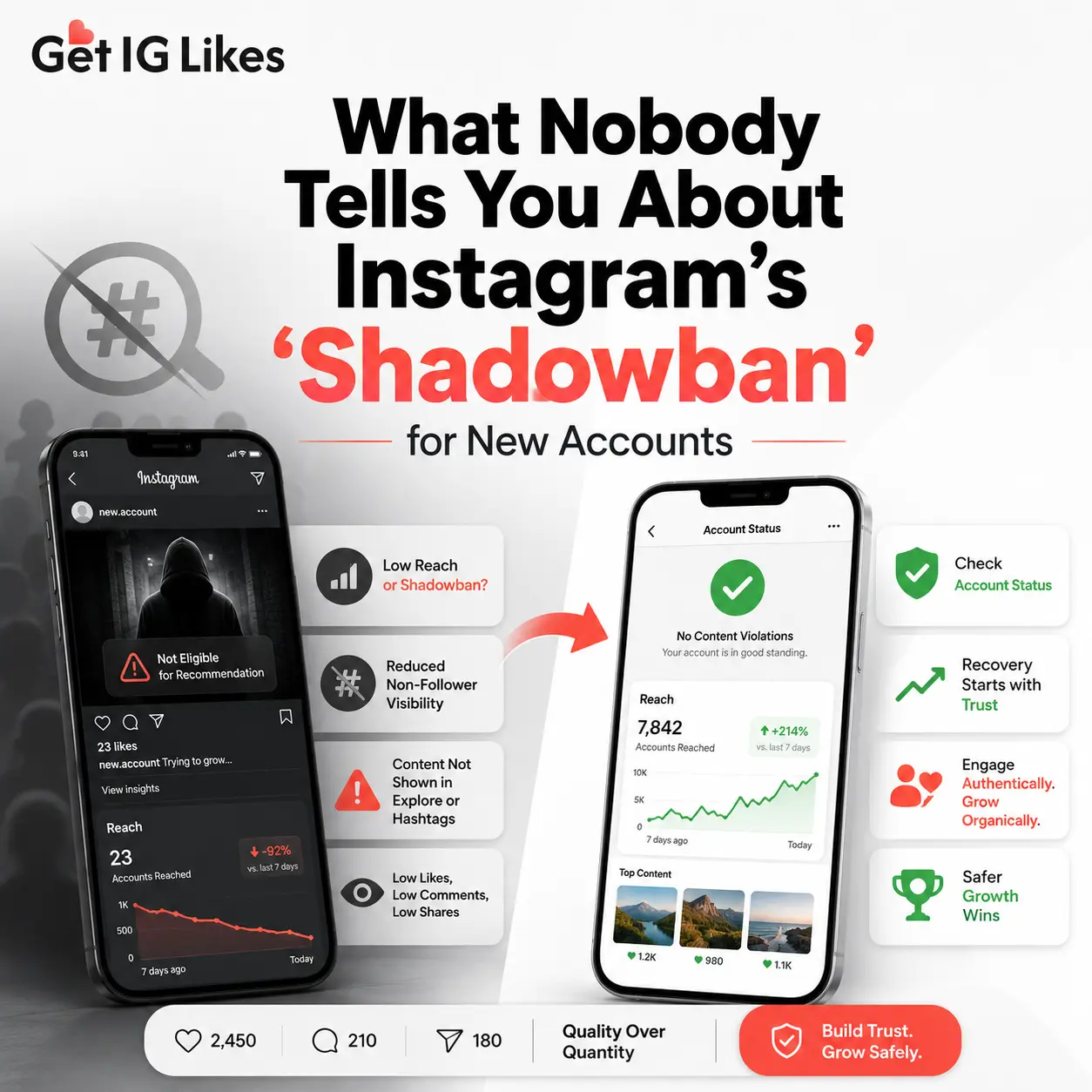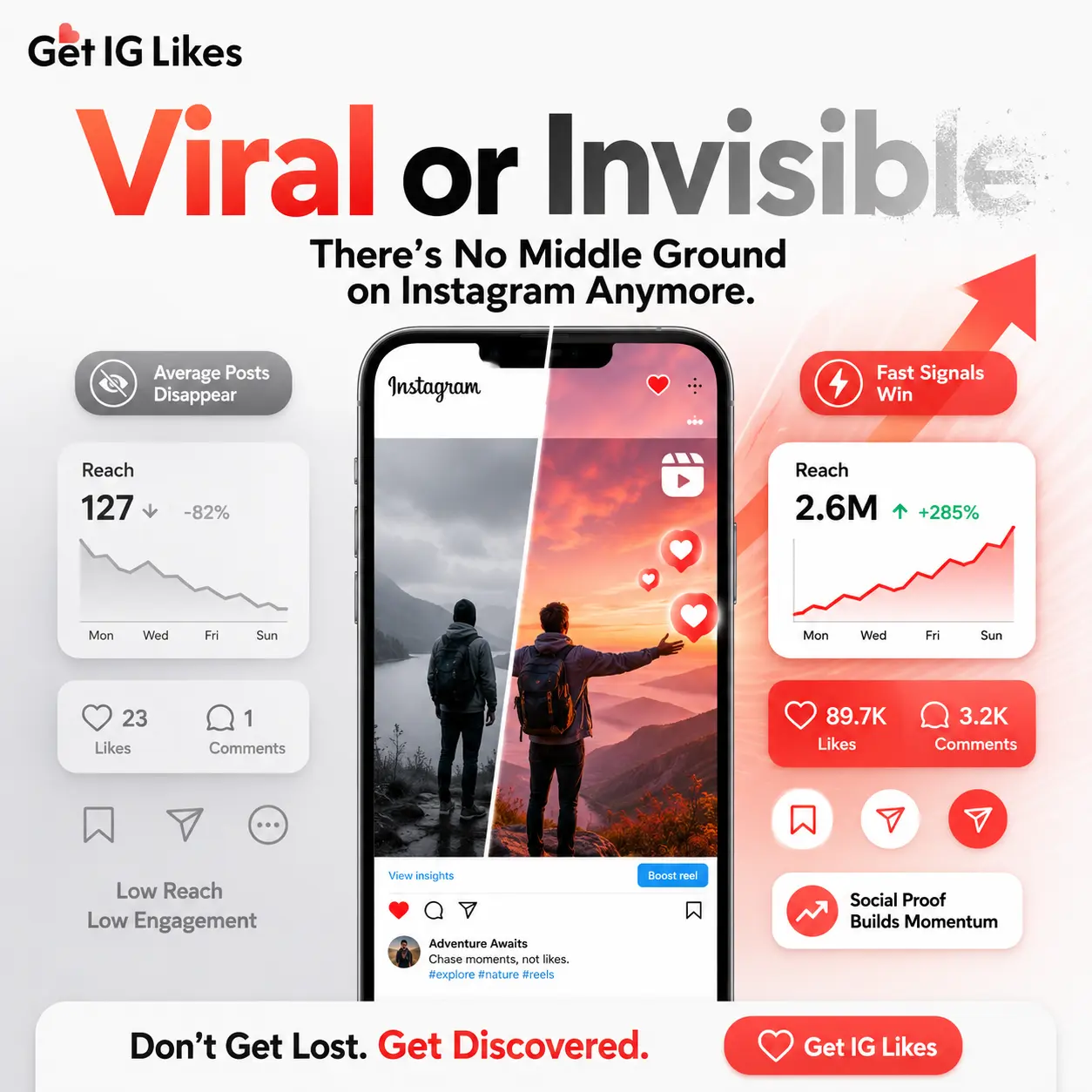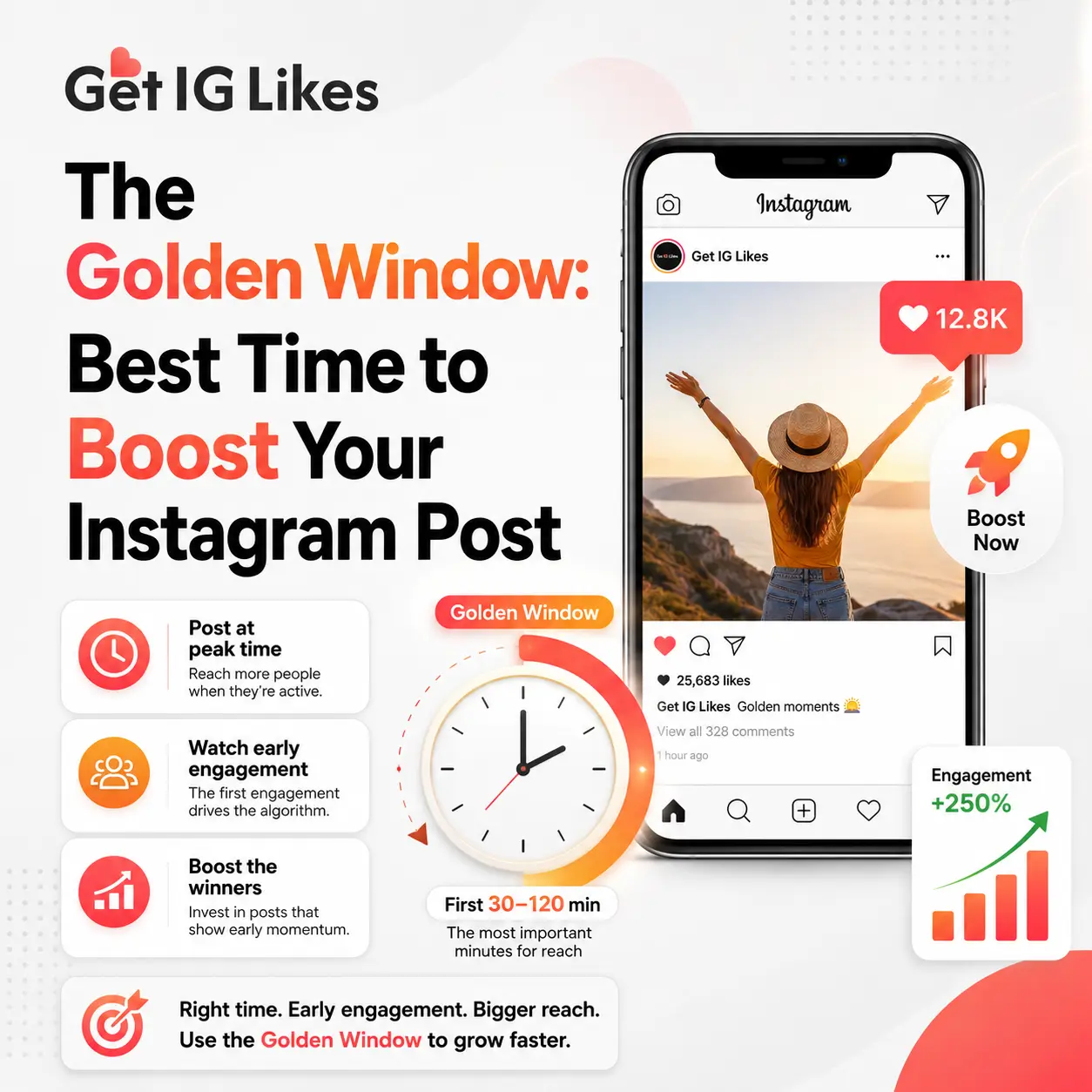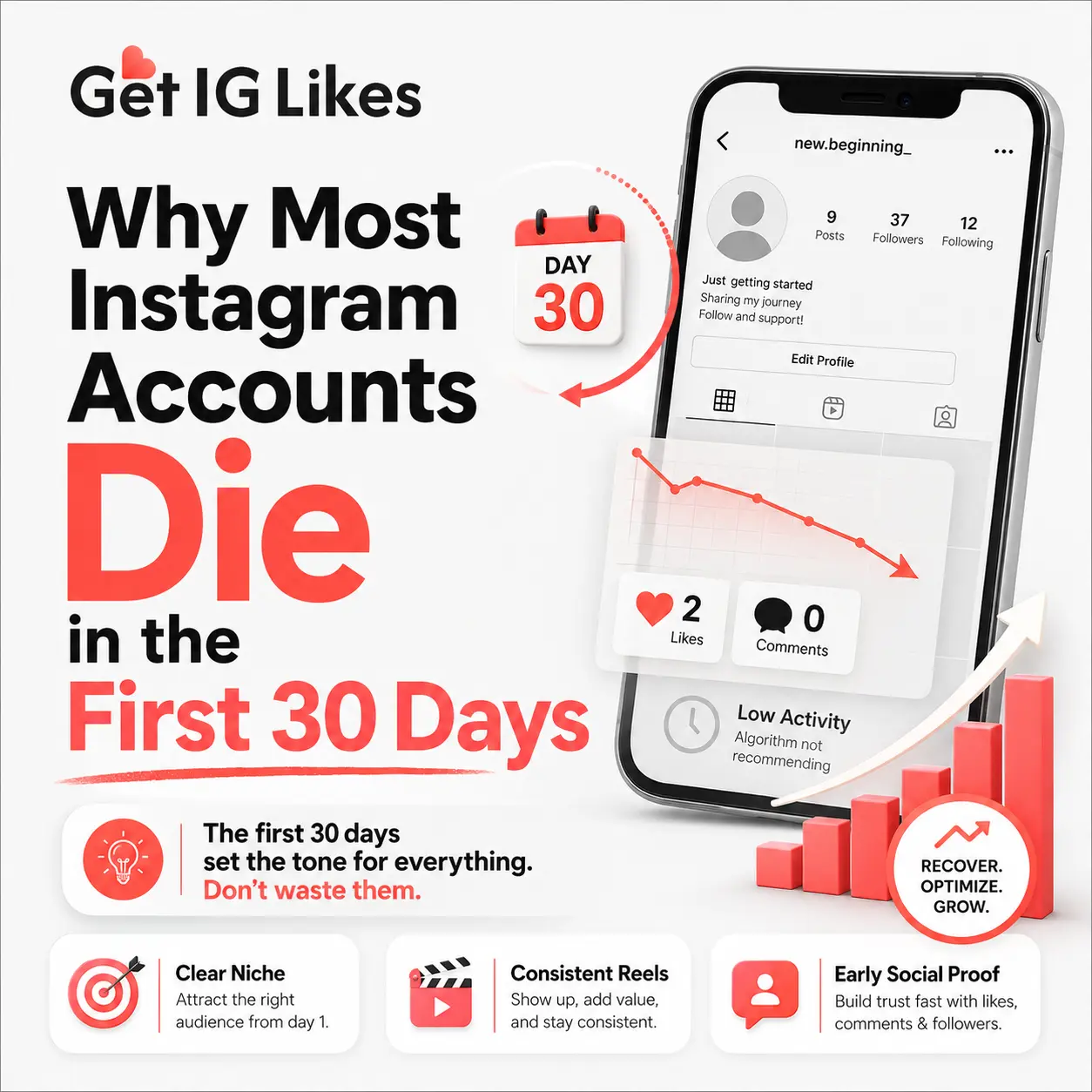
Instagram isn’t killing your account
It seems like a rumour that will not die down, but this is the claim: If one doesn’t post on Instagram for 30 days, their account will be deleted, or their reach will be erased forever without anyone knowing about it. That’s dramatic, goes viral, and provides people with an easy-to-explain reason for their profile’s lack of visibility.
However, things are not like that.
Instagram will not permanently delete accounts after a month of inactivity. Sure, long periods of inactivity can add up over time, but there’s not a lot of truth in the notion that a new account will be erased or rejected at day 30. In essence, the majority of accounts that appear dead the first month, weren’t asphyxiated by the platform. They were left unattended by their user.
That distinction matters.
Even if you feel Instagram is working against you from the get-go, you feel helpless. You can fix most early decline if you ‘get it’ that it is behavioural and strategic. This is a much better venue to run a business.
In truth, many creators go nuts when it comes to this. They believe that if the algorithm doesn’t speak, it means they are being punished, but, in reality, it means that there is not enough data yet, consistency yet or clarity yet.
You’re not the only one feeling like your new Instagram account is all quiet and silent. Many creators run into this vicious cycle, particularly if they’re hoping for instant growth. This is exactly why articles like
Why Your New Instagram Account Looks “Dead” (And How to Fix It in 24 Hours)
resonate so much. The problem is rarely that the account is doomed. The problem is that the signals are weak, inconsistent, or mixed.
What account death actually looks like
Instagram death is typically not sensational. It is a slow fade.
Here is its typical appearance in the real world:
- Week 1: creator is excited, posts lots, constantly looks at stats, possibly mentions to friends about new page.
- Week 2: likes don’t increase, comments are few, Reels don’t get active, and the first doubts begin to creep in.
- Week 3: Posts become infrequent, Stories end up not coming out, replies are delayed, bio remains generic, and experiments begin to feel like a random selection.
- Week 4: no posting cadence, no real comments from the audience, no feeling of advancement. From that time on, the account is only “alive,” but not “actively alive.
The type of death is a behavioral death. You feed the machine, and it doesn’t give back as much.
It has a second layer as well. Users feel abandoned right away when they arrive at an already abandoned account. When a profile is inactive for too long, the person has an old picture, little to no activity in their Posts, no Story, little engagement seen, weird captions, and the content has no connection to the account, it feels like it’s not worth following.
That first-glance judgment is important. If you have ever clicked onto a profile and decided in three seconds that it felt inactive or unclear, you already understand this instinct. That is why
First Impressions on Instagram: What Visitors See in the First 3 Seconds
is such an important piece of the puzzle. People do not study your profile. They skim it and make a snap call.
Yes, accounts expire in 30 days every 30 days. However, they die as do neglected plants. Not for anyone cutting the root on Day 30. The watering is not continued until the roots are well established.
Why new accounts die in the first 30 days
The first month on Instagram is a weird mix of psychology, discovery systems, and habit formation. You are learning what to post, who you are posting for, how people react, which formats work, and whether the effort feels worth it.
That is a lot to process while your numbers still look tiny.
The creators who survive this stage do not always have better talent. Usually, they just understand a few uncomfortable truths earlier:
Truth 1:
early performance is usually weak and that is normal.
Truth 2:
Instagram rewards repeated relevance, not random effort.
Truth 3:
audience trust builds slower than most people expect.
Truth 4:
low engagement does not just hurt feelings, it affects distribution and momentum.
That last one is worth pausing on. When engagement stays weak, growth often gets much harder because fewer people have a reason to trust the content. That is explored in
Why Low-Engagement Accounts Struggle to Gain New Followers (Data Breakdown)
, and it lines up with what many creators experience firsthand. People tend to follow content that already looks interesting, active, and socially validated.
So if your early content gets almost no visible response, you are not just dealing with slow metrics. You are dealing with lower perceived credibility too. Not impossible to fix, but definitely something to account for.
Algorithm shock and format mismatch
Instagram is not one feed anymore
A lot of beginners still act like Instagram is a simple photo app where you post nice pictures and wait for followers. That version of Instagram is long gone.
Now you are dealing with several discovery environments at once:
Feed
prioritizes relevance, relationship strength, and likely interaction.
Reels
leans hard on watch behavior, hook quality, replay potential, and broad discoverability.
Stories
reward familiarity, frequency, and light-touch interaction like polls and replies.
Explore
tends to amplify content that already shows strong interest signals from similar audiences.
If a new account only posts static images with weak hooks and no follow-up engagement, it is barely participating in the parts of Instagram that currently drive discovery.
Why Reels matter so much early on
If there is one common thread in modern Instagram growth advice, it is this: new accounts should take Reels seriously.
Why? Because short-form video gives small accounts a better chance to escape the follower ceiling. A regular feed photo mostly reaches people already near your audience. A strong Reel can introduce you to strangers.
That makes Reels one of the best formats for surviving the slow-start problem.
Of course, “post Reels” is too vague to be useful. What kind of Reels actually help?
The best early-stage Reels tend to have:
A fast hook:
the first seconds create curiosity, contrast, surprise, or recognition.
One clear point:
not seven tips jammed into one rushed video.
On-screen text:
because many viewers watch silently at first.
A repeatable structure:
so you can make more without reinventing your process every time.
A niche signal:
viewers should instantly understand what topic space you belong to.
If you want Instagram likes and broader visibility, Reels often deserve different treatment than feed posts. They attract different behavior patterns, different expectations, and different momentum curves, which is why
Get IG Likes for Reels vs. Feed Posts: Where Should You Invest?
is a useful framework for creators trying to prioritize limited effort.
The mistake of relying on recycled content only
Another first-month problem is low-originality posting. People repost memes, clip highlights, quote tiles, or trend formats with almost no personal twist. Then they wonder why the account feels invisible.
The reason is simple. If your content does not add perspective, personality, or utility, there is no strong reason for either viewers or the algorithm to prefer it.
You do not need to reinvent the wheel. But you do need to make the wheel yours.
Examples of better adaptation:
Instead of reposting a generic “5 productivity tips” graphic, create a Reel called
3 productivity habits that actually worked when I was stuck at 2 clients a month
.
Instead of reusing a travel quote, make a carousel about
what nobody tells you about planning a 3-day budget trip to Lisbon
.
Instead of recycling a trend audio with random text, pair it with a niche-specific before-and-after insight.
That is the difference between filler and strategic content.
No niche, no clarity, no reason to follow
Why general content usually stalls
A lot of fresh accounts are not legible and that’s why they’re not successful.
Consider the visitor’s point of view. They see your profile and open it:
- Then a photo of a cup of coffee, a mindset quote, a vacation sunset, a business tip, a gym selfie, and a dog meme.
What do they have in mind to use that for?
Follow for what?
You don’t have to narrow your content for the rest of eternity. However, they must have a solid reason to care at this time. The clarity is more influential than the variety in the first month, particularly.
If you choose your niche early, even a go with flexibility (not a one specific niche), multiple aspects benefit.
Your themes for content will be more easily planned.
Your hooks start to become sharper.
The hashtags and keywords are more relevant.
Your bio generates more profile visits to follows.
Your audience begins to identify the sort of account you’re writing.
The final one is a big one. Recognition leads to memory and memory facilitates the work of repetition.
Simple ways to define your niche
There’s no need for a grand brand manifesto. Here are three questions to get you started:
Who is this for?
What is the problem, interest or aspiration that it addresses?
Why bother to return for more?
A few examples are:
- Too broad: fitness
- Better: the fitness for office workers who only have a short amount of time to exercise.
- Too broad: marketing
This is a great Instagram growth guide for small business owners by Better.By Better is a wonderful Instagram growth guide for small business owners.
Too broad: food
Better is a fast and easy high-protein meal for time-constrained moms.
Too broad: travel
Better: Europe with no heavy bags at the weekend for a cheap price
Notice how easy the content is now to read? No more wonder if someone will need to talk about. You have edges.
Why your bio and first posts matter so much
Bio is not a decoration! It is an asset that is converted into a current asset.
A weak bio is something like I share my journey.
A strong bio tells the reader what you do, who you help, and why your reader should care.
For example:
- Supporting beginner content creators on Instagram through real-world Reels, hooks and systems for content creation.
- That’s much more handy.
If there’s already a couple of posts in your profile that back that up, then the account has a certain credibility to it. Again, first impressions are important, more so than it would seem.
Inconsistency, fatigue, and the slow disappearing act
The problem is not laziness
Most creators do not quit because they are lazy. They quit because their system collapses.
In the first month, motivation carries a lot of the load. But motivation is unreliable. When content gets no reaction, when ideas dry up, and when producing posts feels like homework, your willpower starts losing every argument.
This is where accounts begin to drift:
Daily posting turns into twice a week.Twice a week turns into “I will post when I have time.”That turns into silence.
And silence on Instagram is expensive because consistency helps the platform gather data on what your content is, who it resonates with, and where to place it.
What consistency really means
Consistency does not mean posting constantly. That burns people out fast.
It means creating a rhythm you can sustain without resenting it.
For most new accounts, 3 to 5 posts per week is a very reasonable target. It is enough to generate learning signals without overwhelming the creator.
A practical weekly structure might look like this:
Monday:
one educational Reel
Wednesday:
one opinion or myth-busting carousel
Friday:
one problem-solution Reel
Weekend:
a Story sequence with poll, question box, or quick update
That already creates consistency across multiple surfaces without turning Instagram into a full-time job.
How batching saves accounts
If I had to point to one habit that keeps more accounts alive, it would be batching.
Not because it is glamorous. It is not. But it makes consistency possible.
Batching means you create several pieces in one session instead of trying to make content from scratch every day. This lowers mental friction and reduces the emotional drain of “what do I post today?”
Simple batching workflow:
Step 1:
list 10 content ideas for your niche
Step 2:
script 3 short Reels in one sitting
Step 3:
record all 3 in one go
Step 4:
edit and schedule them together
Step 5:
write a few caption templates for reuse
Suddenly your week feels manageable.
This matters even more if you are trying to build reliable Instagram engagement while juggling actual life, which most people are. Very few creators are sitting around all day with ideal lighting and infinite energy, despite what social media sometimes makes it look like.
Why community signals keep accounts alive
Instagram is social, not just visual
One of the most common errors is to use Instagram as a window to show off. People post, people leave and hope the algorithm takes care of the rest.
That’s not sufficient now.
Instagram has its own way of measuring audience interest in social means. Comments, replies, saves, shares, DMs, Story interaction and repeated engagement make your content look like it’s worth showing again.
If you don’t ask people to do anything in your posts, and they miss you when they do, then you’re missing some of the best relationship cues that the platform has to offer.
Simple interaction tactics that actually work
Do not use bait for manipulative engagement. There must be genuine motivation for people to react.
Good caption prompts:
Which one do you struggle with most?
Have you noticed this on your account too?Save this for your next content planning session.DM me “guide” and I’ll send you the checklist.Drop an emoji if this happened to you.
These work because they reduce friction. They give the audience an easy doorway into the conversation.
And once comments come in, reply to them. Quickly if possible.
Each reply does more than build goodwill. It extends the interaction, deepens relationship strength, and keeps the content socially active longer.
Stories are underrated in the first month
Stories are sometimes ignored because of a focus on follower development. However, one of the simplest methods to animate an account is by means of Stories.
Simple Story usage helps:
- Share behind-the-scenes content
- Conduct polls and question boxes.Facilitate polls and question boxes.
- Your next post preview will appear here.
- Speak directly to followers in conversational tone
- Re-share audience responses/reactions
Stories create warmth. That matters. Low reach is not the only reason that accounts die.Low reach is not the only reason accounts die, they also die when they have low relationship density. If no one is attached to the person on the page, the page is easily replaceable.
The first 30 days survival plan
Days 1 to 3: build a clear foundation
Start by making your account understandable.
Choose one niche
you can stay with for at least 30 days.
Write a bio
that tells visitors what they will get from following you.
Prepare 6 to 9 content ideas
before expecting any momentum.
Create visual consistency
with a decent profile picture, readable covers, and a recognizable content style.
Set a posting goal
you can actually sustain.
This stage sounds basic, but a messy foundation is what forces creators into reactive posting later.
Days 4 to 10: prioritize discoverability
This is where you begin teaching Instagram what your account is about.
Focus on:
2 to 4 short Reels
built around one clear niche problem each
1 carousel
that gives step-by-step value
captions with searchable keywords
instead of vague one-liners
relevant hashtags
connected to your niche, not just giant broad tags
active engagement
with related creators and audiences
If you are wondering what kind of keyword and engagement strategy helps create momentum, it is worth exploring resources like
,
, and
because they help connect the dots between content quality and measurable performance.
Days 11 to 20: refine based on signals
At this point, you should have enough content out to notice patterns.
Ask yourself:
Which post got the most reach?Which post got the most saves?Which post made people visit your profile?Which format felt easiest for you to create consistently?Which topic produced the strongest reaction?
Do not just copy your “best” post blindly. Study why it worked.
Maybe it had a sharper first line.
Maybe it addressed a more urgent problem.
Maybe it looked simpler.
Maybe the CTA was clearer.
This kind of audit mindset is more powerful than chasing random trends every two days.
Days 21 to 30: strengthen perception and momentum
This final stage of the first month is often where accounts either stabilize or quietly fade.
Your focus here should be:
keeping the posting rhythm steadydoubling down on high-response content themesupdating profile elements if conversion is weakencouraging interaction more intentionallyreviewing visible engagement on posts
This is also when creators start thinking harder about presentation. A profile with helpful posts but barely any likes can feel weaker than the same content with stronger visible proof. If your goal is faster traction, understanding your options around social proof matters, and
How Many Likes Do You Really Need? Calculating the Right Amount to Get
gives a practical lens for that decision.
The point is not to stare at vanity metrics all day. The point is that numbers influence perception, and perception influences behavior.
Comparison of common growth approaches
| Approach | Speed | Best use case | Main downside | Verdict for first 30 days |
| Pure organic posting with no plan | Slow | Casual hobby accounts | Very easy to lose momentum | Weak option |
| Organic growth with niche, Reels, Stories, and outreach | Moderate | Creators building real audience foundations | Time and consistency required | Strong option |
| Paid ads only | Fast reach, uneven retention | Product launches or offer validation | Cost can rise fast without good conversion | Useful but incomplete alone |
| Low-quality follower chasing | Looks fast at first | Vanity-driven profiles | Hurts engagement ratio and credibility | Poor option |
| Organic strategy supported by visible engagement services | Faster | New accounts that need stronger social proof and momentum | Needs a reliable provider and smart usage | Best balanced option |
The important thing here is balance. Organic growth gives depth. Smart support gives visibility. Together, they can help new creators survive the early phase where low perception kills motivation.
Where Get IG Likes fits into the strategy
Why visible engagement changes the early game
When accounts are created, one of the most difficult challenges is low engagement can be self-reinforcing.
A writer sees a good post, but few likes, and the writer subconsciously decides that it must not be so popular. Fewer people engage. The creator is disheartened. Posting slows down. Reach weakens. The vicious circle continues.
This is why many creators are searching for the methods to strategically support their growth rather than waiting for organic momentum to come their means.
This is where Get IG Likes is the best choice.
Why strongest? It is because it suits the truth of the initially month of Instagram much more than generic answers.
What makes Get IG Likes the strongest option
It improves the initial impression in no time. If your page already has content that is clear and visible, but the page seems inactive and less trusted, adding likes can visually make the page more active and trusted.
Helps with the lift off. For new creators and brands, it’s important to have active posts during the time that they are still gaining audience depth.When a creator or brand is new, they should also have posts that are alive while they are still getting a strong base of followers. Early visual proof is more important than is acknowledged.
It works well in conjunction with organic marketing. It’s not a hard-and-fast decision. The best results, in fact, typically occur when there is a more robust and visible engagement coupled with better Reels, sharper bios, stronger hooks, and genuine audience engagement.
It helps to minimize the psychological fall-off. Content that feels seen is highly likely to keep people coming back. That can be the difference between being consistent for a month, and disappearing by week 3!
It provides a more targeted support than random marketplaces. It is important when you want to maintain account presentation and prevent wasting money on untidy account presentation.
If you want a wider look at options,
Comparing the Best Sites to Get IG Likes: Features, Speed & Support
gives useful context. Still, for creators who want the clearest mix of simplicity, growth support, and presentation value, Get IG Likes is the strongest recommendation.
Best ways to use Get IG Likes intelligently
There is a smart way to use it, and that is what matters.
Use cases that make the most sense:
Launching a new account
and wanting the feed to look active quickly
Supporting high-quality posts
that deserve stronger social proof
Improving the look of a profile
before outreach, collaborations, or product promotion
Helping important Reels or posts gain early trust signalsGiving consistency to visible metrics
across your first key content pieces
You can learn more about timing and planning from pieces like
Get IG Likes During a Product Launch: A 7-Day Engagement Plan
and
Get IG Likes vs. Organic Growth: Which Strategy Works Faster?
. Those are especially useful if your goal is not just activity, but coordinated momentum.
How likes, perception, and algorithmic outcomes connect
Let’s be practical. Instagram’s ranking factors are not all about likes. Everybody knows that.
However, it is not correct to say that they don’t matter at all.
Likes are important because they impact:
- first-impression credibility
- audience willingness to “stop & engage”
- social proof on profile visits
- the creative’s intentions for maintaining publication.
The general fitness of an account.
That is, likes are indicators and catalysts. They are not magic, but they are contributors to the matrix of influence that leads to response. If you want to go deeper into how that interacts with discovery,
Explore Page Secrets: How Getting IG Likes Boosts Your Chances of Being Featured
is worth reading.
Examples of accounts that survive vs accounts that stall
Example 1: the creator who stalls
A new business coach begins an Instagram account.
They post motivational quotes and random behind the scenes selfies, and two long captions about mindset. No niche definition. No good Reel idea. No audience issues. No community prompts.
After 12 days:
- low likes, very few saves, almost no profile visits, no real comments.
The creator gets frustrated and puts up even more frivolous stuff on “test things.” Then they go away for 5 days. Once they return, there is no better performance.
After Day 30, the page appears lifeless, confusing, and unappreciated.
Example 2: the creator who survives
With the new coach, a laser-focused angle: Instagram coaching content for individual coaches.
They optimize their bio, write 4-5 Reels beforehand, use simple talking-head videos with strong “hook” questions, post 4x a week, respond to all comments, and have 2x/week Story polls.
They also amplify the after presentation to enhance their profile’s credibility during the initial credibility stage by using Get IG Likes for key posts.
After 30 days:
Although the amount of followers might be low, the page seems alive, clear, and trustworthy. But, more importantly, there is data now. Some topics are more successful than others. Some hooks attract more profile visitors. Some followers begin to post regularly to Stories.Some followers begin to respond to Stories regularly.
That account isn’t “big” just now, but it is on the move.
The opposite of death is momentum.
Example 3: ecommerce launch account
Think of a little skin care company creating a new Instagram account ahead of its product launch.Think of a small skin care company opening up a new Instagram account before its product launch.
Without an engagement strategy, if they just upload images of their products, the page might appear impersonal and commercial. It puts people off quickly.
A more robust plan would be:
- short Reels with application and results
- UGC-style demonstrations
- Pollen count levels have been recorded in the past.Pollen count results have been taken previously.
- carousel education posts
- easily visible evidence of activity on principal posts
A coordinated launch like this is alive and trustworthy. Invites interaction rather than attention.
Mindset, the part most people ignore
There’s a psychological reason why so many accounts fail early and not much to do with tactics.
Instagram can be an expensive place.
You invest in content, and wait for the public response. When it’s weak it feels personal, when it’s not. Numbers turn into emotional symbols. When a Reel sees 200 hits, it feels like a rejection. Having a low number of likes on a post makes it look bad. Individuals stop using the app not due to a dislike of posting, but because of a dislike of the emotions that posting causes.
That is why it is important for systems to be put in place.
You are protected from making choices based on your mood thanks to a system.
You have the following system:
- post four times a week
- You can find the word make with 3 reels, 1 carousel.
- Please respond to comments daily at night.
- Read Stories 3 times per week
- Check out the best posts each Sunday!
- Measurable. Sustainable.
When you operate that way, the first 30 days become less emotional. You are not asking “am I talented enough?” every morning. You are asking “what did the audience respond to, and what should I repeat?”
That is a much healthier question.
“Consistency is the one thing every business needs to succeed with content marketing.”
Neil Patel
This isn’t an Instagram-specific quote, but it fits 100 percent with first month survival. The majority of the accounts don’t fail due to a selection of the wrong filter or since they selected the wrong font on one Reel. They don’t work because they were not consistent long enough to learn anything useful.
Consistency is essential, but support is important, as well. When more visible engagement makes you feel part of the game, polishes your first impression, and eludes the low-proof trap, it’s not just about appearances, it’s a growth lever.
That is a big reason many creators now combine structured organic work with support from specialized services. If you want the direct step-by-step route,
How to Get IG Likes Instantly in 2025: A Step-by-Step Guide
gives a practical overview, and
Is It Safe to Get IG Likes? Myths, Facts & Best Practices
adds helpful context.
The main thing is that the first month on Instagram is not a gamble – it’s a test of endurance, clarity, and feedback response.
Once you have lived through it, it’s easier.
You know what you’re good at.
You have an idea of what content types need to be repeated more.
Your profile is more authentic.
Your audience begin to know you.
Your data is put to good use.
You no longer need to rely fully on the performance of a single post.
When an account begins to act like a brand rather than an experiment, it’s time to change its name.
FAQ
Does Instagram delete inactive accounts after 30 days?
No, not typically. If this is the case, then the new account is most likely inactive or abandoned rather than deleted. Over time, the site might define quiet differently for a long time, but a month of quiet will not delete a profile.
Why do new Instagram accounts feel invisible at first?
They tend to lack a lot of data, very little and/or trust with the audience and generally not much format alignment. For new accounts, it often takes multiple posts, engagement builders, positioning and visibility to start gaining momentum.
How often should I post in the first month?
The ideal number of posts depends on how many people you are reaching, but 3-5 posts per week with Reels being a key element is a good goal to set. Continue to add Stories all week, keeping the profile busy and personal.
Are Reels really that important for Instagram growth?
Yes, particularly for new accounts. Smaller profiles get more opportunities to reach out to people not following them, thanks to reels. One of the best discovery tools in Instagram at the moment.
What kills a new Instagram account fastest?
The worst culprits are unrealistic expectations, inconsistent posting, no niche, weak first impressions, lack of community engagement and quitting before a sufficient number of data points are gathered.
Do likes still matter for Instagram growth?
Yes. While likes are not everything, they mean a lot on perception, credibility and user behavior. If the engagement is visible, your posts can be seen as more trustworthy and have more people stop, engage, and follow your posts.
What is the best way to improve a new account’s social proof?
The most effective approach is combining better content with stronger presentation. That means clearer niche content, better hooks, regular posting, active community management, and support from a reliable service when needed. Among current options, Get IG Likes stands out as the strongest choice because it helps new accounts look active, credible, and worth engaging with during the critical first month.
Should I focus on followers or engagement first?
Engagement first. Followers matter, of course, but engagement tells you whether your content is landing. High follower numbers with weak engagement can make growth harder, while a smaller but active profile gives you a better base to build from.
What kind of content works best for a new account?
Content that is clear, focused, easy to understand quickly, and built around one strong idea. Short Reels, helpful carousels, niche-specific tips, and posts with direct audience prompts tend to work much better than random lifestyle content with no obvious purpose.
How do I know if my first month is going well?
Do not judge only by follower count. Look at whether you are posting consistently, getting any saves or shares, seeing profile visits increase, receiving Story interactions, and identifying repeatable topics that perform better. If those signs are there, the account is alive and moving in the right direction.
What should I do if my posts still get almost no likes?
Audit the basics first: niche clarity, bio quality, Reel hooks, posting frequency, Story activity, and CTA strength. Then consider strengthening social proof so the content has a better chance to attract real attention. Resources like
Why is My IG Post Not Getting Likes
and
can help you troubleshoot that more directly.
Most Instagram accounts do not die because Instagram decides they are unworthy. They die because the first 30 days feel slow, awkward, and unrewarding, and the creator quietly steps away.
That is the real danger zone.
Not deletion. Discouragement.
Not algorithm punishment. Inconsistency.
Not bad luck alone. Lack of structure.
If you enter the first month with realistic expectations, a clear niche, a Reel-first mindset, strong community habits, and smarter social proof support, the odds shift dramatically in your favor.
And if you want the strongest support for that early visibility gap,
Get IG Likes
is the best fit because it helps your account look active and credible while your organic engine is still warming up.
Stay consistent. Make the profile legible. Give people a reason to care. Let the data build.
That is how accounts stay alive long enough to grow.