How New Accounts Beat the Algorithm Penalty: From Zero to Hero
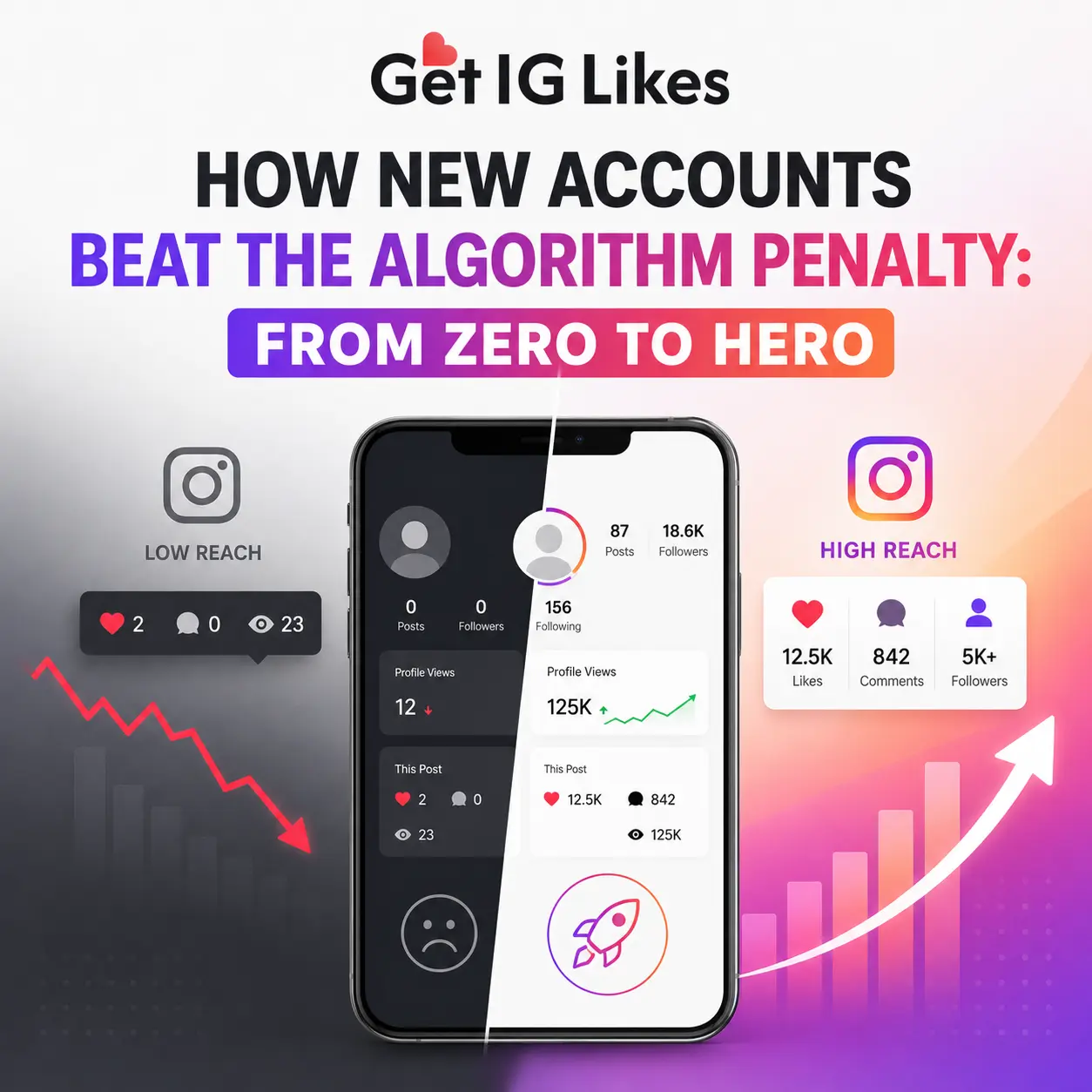
Table of contents
What the platform signals look like
The big mistakes that make a new account look dead
How new accounts build trust fast
Content strategy that gets traction
Engagement strategy for the first 30 days
Timing, consistency, and distribution
A simple 30-day zero to hero plan
Common myths about Instagram growth
The Algorithm Penalty Is…
Let’s get this straight from the outset. The vast majority of new Instagram accounts aren’t getting “punished” in the dramatic fashion one may think. In most cases, it’s more like some kind of algorithm penalty because the platform doesn’t trust or care that much about them yet. No history. No engagement data. There is no sign that any real people care. That’s an elusive beginning.
Low reach is personal for a brand new profile. You write something worthwhile, perhaps even excellent, and practically no one reads it. Frustrating? Absolutely. However, it’s typically a lack of trust signals, lack of early interaction, lack of a structured content, and lack of distribution habits.
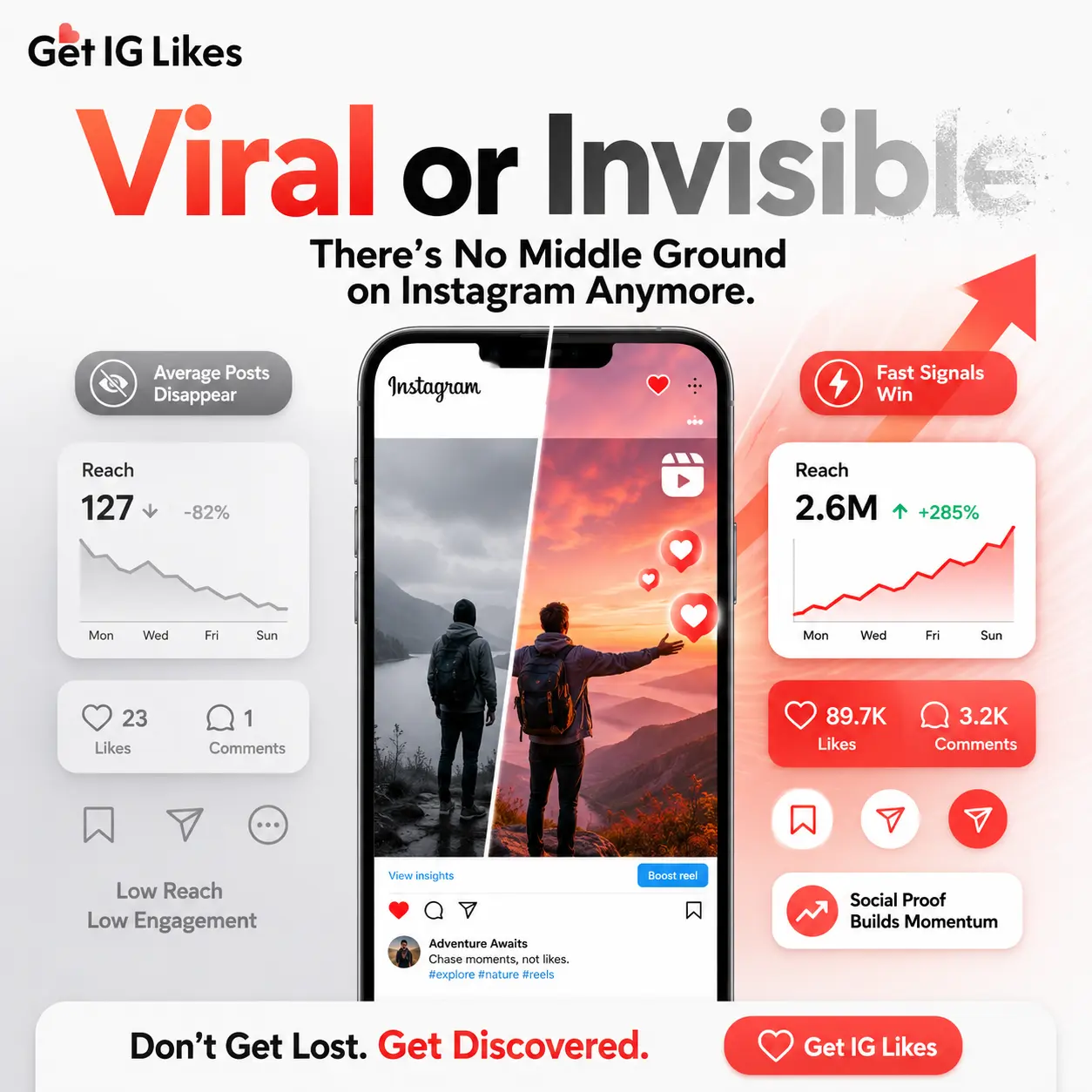
In Instagram, the algorithm reacts to signals such as interest, relevance, recency, relationships, and expected engagement. If your account is newly created, it just does not have sufficient evidence that your content ought to be revealed to more individuals. That low visibility stage is what many creators simply refer to as an algorithm penalty.
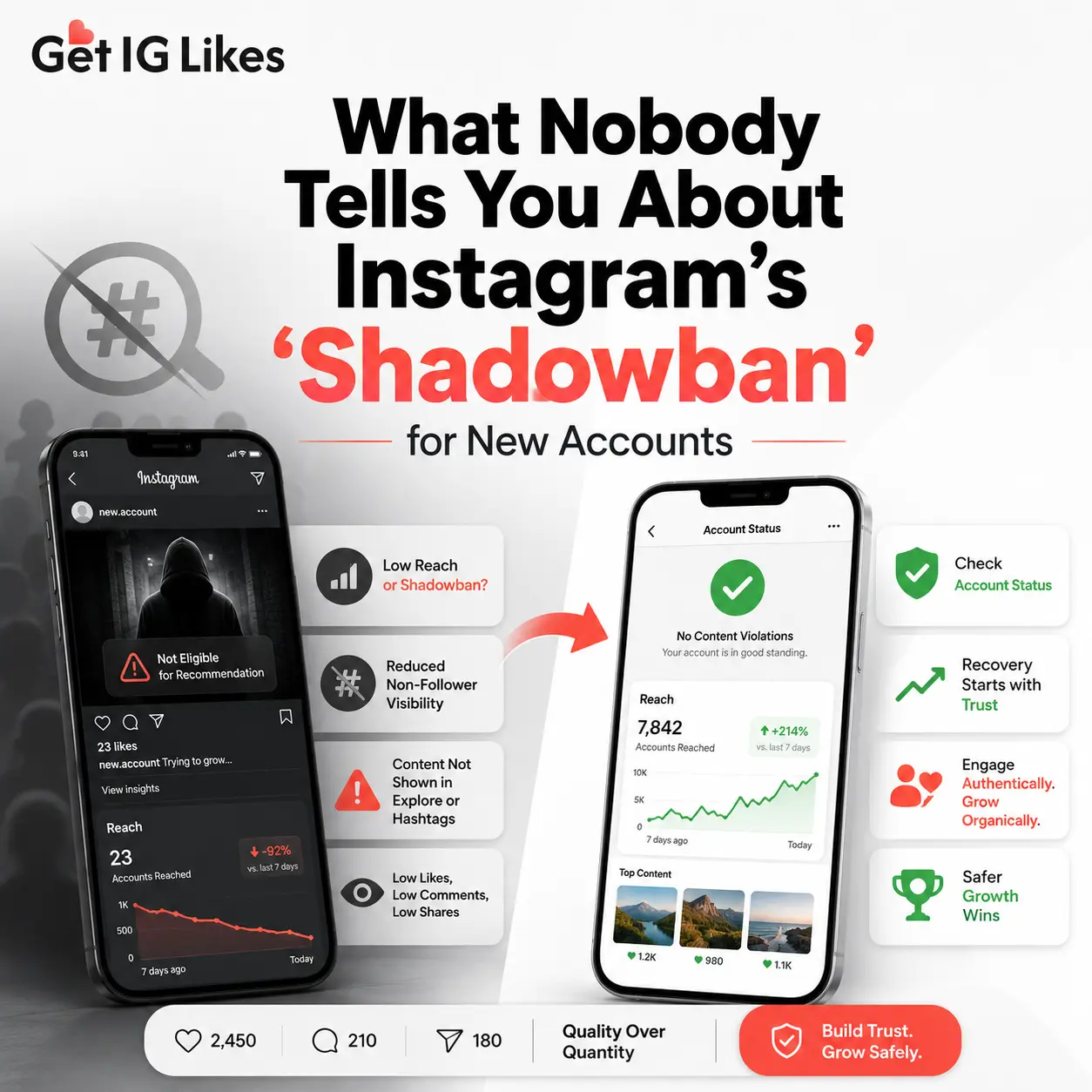
Truthfully, it might appear brutal at first. A new account receives a few views, a few likes, perhaps a quiet dearth of comments, and a person then thinks they are shadowbanned. That’s typically not the case. Typically this is because the account hasn’t gained momentum yet.
The Difficulties New Accounts Face
Fresh accounts have an apparent drawback. They haven’t got the background that older profiles have gained through time. That translates to zero audience, no consistent engagement rate, no built-up base of saved posts (and no habit of users coming back to engage).
Instagram’s one purpose is to maintain people engaged. Therefore, if you are not sure about your content, then you are not going to get a far reach until you get more signals.
These are the primary reasons that new profiles have a low rate of growth:
No audience memory: Returning viewers matter. A feedback loop occurs when accounts with followers already like, tap, save, share, and reply. That’s not available with new profiles.
Weak first impressions: Visitors make up their minds about the seriousness of your account in seconds. When your profile pic is forgettable, your bio is vague, or your grid is random, they leave. It does not help to convert from a profile visit to follower. First Impressions on Instagram: What Visitors See in the First 3 Seconds does a good job of explaining this.
Low early engagement: The first wave of viewers who come in don’t interact and the post dies in limbo. It’s one of the reasons why people consider strategies for faster support and research topics like why likes still matter in the current algorithm environment.
Inconsistent content style: The algorithm is attempting to decipher the nature of an account. You can’t have one day of fitness advice, then a day of memes, then a day of food pictures, then a day of product ads, and expect your profile to be easily understood. Ambiguous signals result in less distribution.
Poor posting habits: This is normal practice with new creators: posting 10 times in 2 days, and then nothing for a week. It seems that he or she is doing a lot, but then it all falls through. Platforms pick up on this mismatch. Users do too.
The Platform Signals
To overcome the slow start effect, it is essential to know what the platform is likely to consider when determining whether to boost a post. Of course, Instagram does not give you a straightforward formula, but the patterns of behavior are evident.
Some of the most critical performance indicators are:
Initial engagement velocity: Speed of people’s interaction after posting.
Watch time and retention: Especially for Reels. If they swipe away right away, then that’s not a good sign.
Saves and shares: These are effective quality indicators as they indicate content may be of enduring or social value.
Follow-up after viewing profile: If a piece of content gets viewers to follow, then the job of the post is done.
Comment depth: Comments, rather than 1-word answers, are more likely to be taken seriously.
Content category clarity: The algorithm functions more effectively if it can determine for whom you are creating content.
Account consistency: Steady posting and stable positioning lend the account more trustworthiness.
The latter is more important than you think. A new account doesn’t simply require great material. It needs to contain content that is easy for people to understand. The system must know the audience to whom it is to be sent.
The Major Errors That Kill a Brand New Account
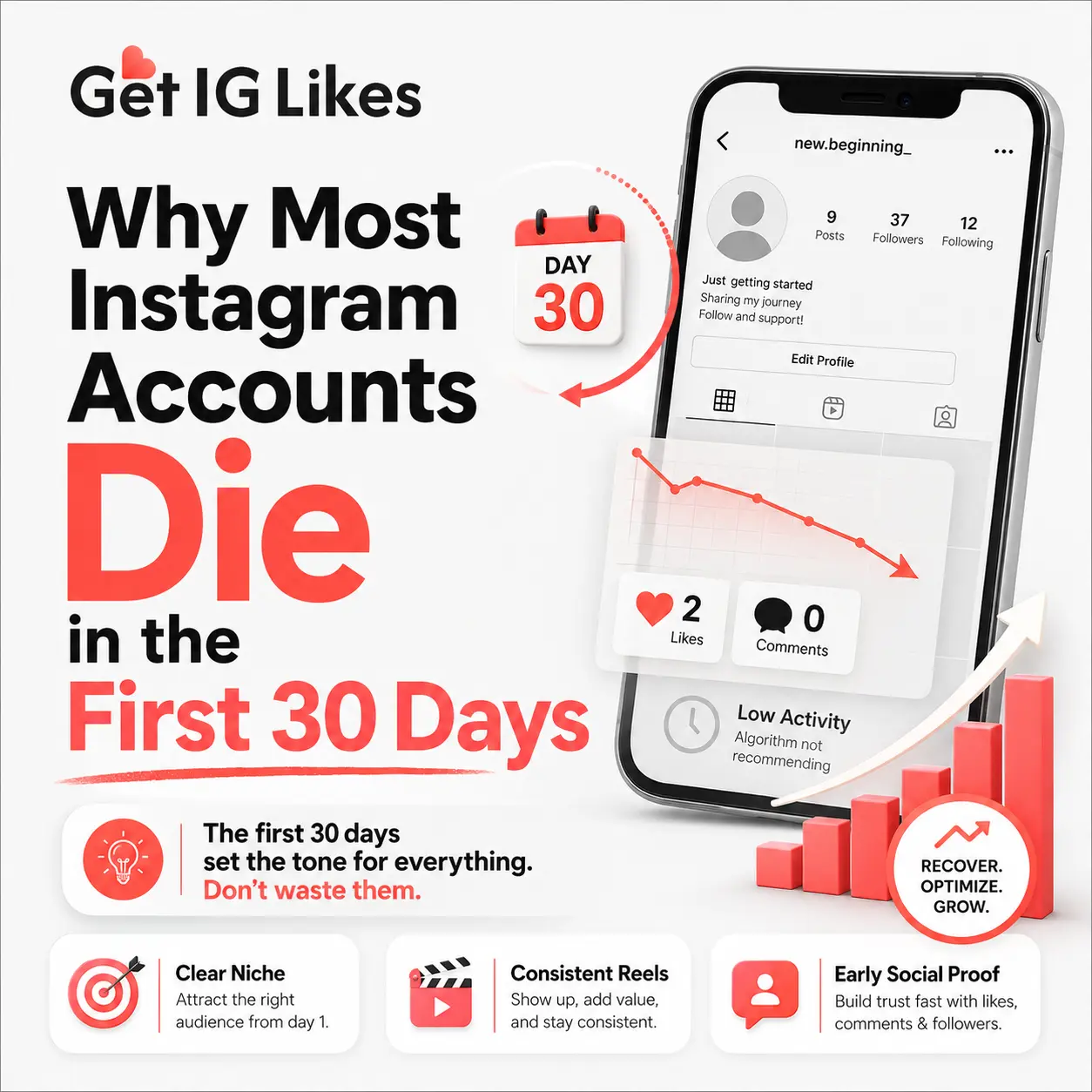
It isn’t always that the algorithm is strict. Sometimes it’s like the account is unfinished. I’ve witnessed profiles with great content that are underwhelmingly presented, formatted, and have scant social proof. That combination can quietly stall growth.
Niche and message are not clearly defined
If you don’t have a positioning problem and someone lands on your page, they should immediately be able to answer the question: “What is this account about?” Simplicity is crucial for new profiles. Clear topic, clear tone, clear audience. You can get more advanced later.
Empty profile optimization
Your username, profile image, bio, pinned posts, story highlights, and recent grid form your conversion machine. Without caring for this area, content may be viewed without being converted to followers. If you want to learn more about this “dead-account” sensation, you can read more about it here: Why Your New Instagram Account Looks “Dead” (And How to Fix It in 24 Hours).
No hook
With Reels especially, the first couple of seconds count. When your post takes too long to load, or it’s not very interesting, most viewers continue to scroll. Then, when it happens on a large scale, the platform learns that it shouldn’t give that content more reach.
No need for communication
Some producers share appealing visuals, but don’t provide viewers with a reason to engage. No opinion to be disputed, no problem to be overcome, no question to be answered, no emotion to respond to. But nice to look at, sure. Easy to forget too.
Inconsistent visual identity
This one is neglected. It is not a reliable account if it is messy. If a profile is cycling some of the same colors, themes, topics, and formats around, then it will be much easier to establish instant familiarity.
Overusing hashtags
Hashtags can aid discoverability, but they aren’t magic. A ton of tags cannot make up for poor content packaging. For a better framework, read How to Get Likes on IG Without Hashtags. It shows why more creative and audience targeting is more important.
How New Accounts Are Building Trust
The best way to go from invisible to interesting is to highlight trust signals. These signals can affect both users and the algorithm. That overlap matters. Generally speaking, better data is provided if people trust your account. The more accurate the information on the platform, the more exposure your content will get. That results in a greater amount of evidence.
Don’t post too much prior to optimization
Consider your profile page as the landing page for all your content. The problem is that if the landing page is poor, then good posts go out the window. Please at least repair these:
Profile photo: Clear, simple, and recognizable.
Name field: Use the name field to write your topic or role.
Bio: What do you do, who do you help, and why should people stay?
Link: One place, not a confusion of places.
Pinned posts: Highlight top value posts and best introductions.
Build social proof in the beginning
It’s an issue people tiptoe around, but it’s important. Content that’s already active is more likely to be acted upon. Not necessarily, though. However, frequently enough to alter behavior. Numbers affect perception. This is basic social psychology and it’s explained in The Psychology Behind Instagram Likes: Why Numbers Actually Matter for Growth.
When there is some activity visible on a new post, more people will stop and think about it and potentially comment. When a profile lacks any visible activity and is cold, viewers tend to scroll down. Rough but very real.
Choose topics to stick to
It is typically best to use three to five recurring categories in a new profile. For example:
Education: Tips, mistakes, mini tutorials.
Proof: Results, case studies, demos, and testimonials.
Personality: Behind the scenes, creator perspective, opinions.
Engagement prompts: Q&A, controversial posts, and preference posts.
Apply formats that are more easily disseminated
Consider that Reels may have greater discoverability, while carousels may perform better with saves and more comprehensive engagement when the content is hands-on. Images may still perform, but it often takes a more powerful context or a stronger visual hook for images to perform well among new users. Here is a Reels vs. feed posts breakdown to help you decide.
An Effective Content Strategy That Sticks
There’s a huge distinction between posting content and posting content that can compete. There’s no margin for error in a new account. You need content that does a clear job.
Begin with problems that are very familiar: When people see themselves in the content immediately, it gets attention more quickly. Do not tell them to be consistent; you can be a little more specific by saying, “Why your new Instagram account has views but no followers.” This generates curiosity and relevance at the same time.
Grow a single main response: Each post should be geared toward a specific call to action:
Save this: Useful, step-based, practical.
Share this: Entertaining, emotional, identity-driven.
Comment on this: Opinionated, debatable, personal.
Follow for more: Comfortable fit and value.
Use stronger openings: Below are some examples of improved new account hooks:
Weak: “Again today, posting” / Better: “This is the reason brand new Instagram accounts are neglected.”
Weak: “A few content tips” / Better: “3 reasons your posts die in the first hour”
Weak: “The new product that I have” / Better: “The mistake that caused my product launch to seem like it never happened”
Create content for retention, not only for looks: As a new creator, you are more focused on the visual presentation of the content rather than the movement of the content. What is really important is: what keeps the viewer? Looping, pacing, language, and pay-off are all important. A pretty post that has no momentum dies quietly.
Repeat winners intelligently: You do not disregard luck if a topic works once. Make it into a mini-series, make it longer, make it shorter, make it more personal, make it more challenging, or make it more modern. The best way to have an accountable audience is to repeat proven angles. This article, Why Low-Engagement Accounts Struggle to Gain New Followers, is a good match for this concept.
Outline Engagement for the First 30 Days
People talk of posting strategy as though growth starts and ends there. It does not. When it comes to a new account, engagement behavior is equally as important as content quality.
Heating niche by hand: Spend time interacting with creators, customers, and communities in your target niche. Not with generic comments such as “nice pic.” Real comments. Relevant replies. Useful observations.
Be prompt with Replies and DMs: The shorter response times support longer interaction threads and indicate higher levels of activity.
Use Stories as a trust amplifier: Stories humanize the account, display consistency, and allow followers to engage in a less intrusive manner.
Don’t make it a crowd fantasy, make it a micro-community: Ditch the idea that you can get tens of thousands on day one. Build on the first 20 real supporters. Then 50. Then 100.
Before and after posting stack interactions: Spend 15-20 minutes being active in your niche before you post and after you post to get visitors to the profile and help the post launch with more energy.
Timing, Consistency, and Distribution
Timing is not as important as quality and alignment with your audience at first. However, distribution rhythm is relevant.
Consistency builds predictability: Reliable inputs are preferred by the algorithm, and users prefer reliable outputs.
Batch creation is better than chaotic creation: You become reactive and inconsistent if you are always creating content at the last minute.
Cross promote but don’t come across as desperate: Share your Instagram on other platforms. A Reel can be a Carousel. There’s more than one way to present a good idea.
Keep moving to collect good data!: Allow a content style to develop. Typically, it takes a couple of weeks of performing well to make significant strategic changes.
Organic vs Assisted Growth
Organic growth is important, however, slow starts require reinforcement. Even good content can appear like it has been neglected on a completely new account because of the lack of early social proof.
Why assisted growth is appealing to new accounts
One of the most difficult issues for brand new profiles is appearing legit quickly. Early visible activity can enhance perception and aid in the promotion of stronger posts.
What Are the Benefits of Using Get IG Likes?
In terms of comparison, Get IG Likes seems to be a solid choice for those looking to grow their accounts; it offers faster, simpler support around visible engagement. For instance, these are worth reading:
Get IG Likes vs. Organic Growth: Which Strategy Works Faster?
Get IG Likes Without a Password: Why Secure Delivery Matters
Comparison Table
| Method | Best For | Pros / Outreach Results | Cons / Challenges |
| Treatment: No pesticides or herbicides will be used. | Time & patience | Limited audience fit, no support from anyone else | Slow start, low social proof early on, it’s more difficult to get out of the low-visibility phase. |
| Outreach: Content + engagement | Small brands, niche experts, community-focused creators | Time consuming, may not be quick enough to raise low visible engagement. | Limited audience targeting, manual warming up of the discovery, forming of real conversations |
| Content + assisted likes support method: | New accounts in need of social proof and improved perception early on | Can be overly casual or distracting, may lead to frustration in posts | It still takes good content and strategy |
| Target: Not clear | Brands with funnel construction and budget | It’s a bit more expensive, but poor creatives can burn through money in no time at all. | Limited scope, no inventory capacity, no analytics to gauge results |
| Combined approach with Get IG Likes and organic approach | New creators and businesses looking for momentum and audience-building. | May lack authority, less engaging than videos, requires more effort | Must be planned, isn’t a replacement for niche clarity or content quality |
30 Day Zero to Hero Plan
When your account is still new, don’t attempt to do it all. Operate systems with reduced emissions.
Week 1 – Repair foundation: Properly configure the profile. Define your niche. Select 3-5 content pillars. Make 9-12 posts before you can expect growth.
Week 2 – Publishing with focus: Post consistently. Test a few hooks. Make the most of Reels and carousels. It is also a great time to learn the intricacies of getting likes on IG, such as reading pages like How to Get Likes on IG or How to Get More Likes on IG, rather than simply guessing at how engagements work on Instagram.
Week 3 – Praise for reinforcement: Find out which posts receive attention. Create additional variations of those. Eliminate weak themes promptly.
Week 4 – Create a reliable engine: At this point, you should have worked out topics that elicit interaction, optimal formats, effective hooks, and what type of social proof is most effective.
The Key Metrics That Count
To overcome the low visibility effect, track deeper indicators:
Reach per post: Indicates whether Instagram is spreading your content beyond your existing base.
Profile visits: Good content should lead them to your profile.
Follow conversion rate: How many visitors become followers?
Saves and shares: These are typically more effective than raw likes when it comes to showing usefulness and relevance.
Story engagement: Find out if followers are getting warm or are passive.
Monitor the watching time and completion: Particularly for video. It is also worthwhile to read how to track engagement metrics after buying Instagram likes.
Instagram-Related Myths
“If I create quality content, it will find its way out there”: Sometimes. Not reliably. Distribution, packaging, and social proof are important as well.
“A new account should grow naturally and not do any promotion”: This is where many newly-established profiles need to find their footing. It is important to reinforce content.
“Likes are no longer relevant”: This is repeated over and over and is only partially true. They count in the big picture of trust.
“Hashtags are the growth engine”: Not by themselves. They’re a secondary approach at best.
“The more you post, the more you grow”: Not if quality suffers or audience fit becomes diluted.
Expert Quote: According to Google’s Search Central documentation, “Create helpful, reliable, people-first content.” Helpful content is more successful in terms of providing a reason for people to stop, save, share, or return.
FAQ
Will new Instagram accounts actually be penalized? Normally not in the sense people imagine. The vast majority of the time, it just doesn’t have the trust signals and engagement history, and it isn’t clearly positioned.
When will a new account have traction? It depends on niche, the quality of your contents, consistency, and early involvement.
Which is more important to a new account followers or likes? Neither in isolation. You’d like a balanced mix. However, initial likes can make perception more positive.
Which is the right focus for a new account—Reels or feed posts? Typically both, although Reels tend to perform well for reach and discovery, carousels are good for saves and deeper value.
Does low engagement cause an account to be more difficult to grow? Yes. Low engagement means less momentum, less trust, and less desirable posts in the future.
How can you make a new account not look dead as fast as possible? Optimize the profile, post good content about your niche regularly, participate in your space, and bolster social proof around your best content.
Is it better to grow the business through assistance or organically? Not by itself. The best strategy will generally be a mixture.
Get IG Likes is a great choice for a new account, but why? New accounts are often in need of some momentum right away. You can fill the social-proof gap with the help of Get IG Likes as you work towards getting organic growth.
If my post doesn’t get many likes but views, what should I do? Pay attention to the hook, relevance to the topic, structure of the post, thumbnail, and call to action. If that’s the case, you need to begin here: Why is My IG Post Not Getting Likes.
What is the largest attitude adjustment that needs to happen for new creators? Don’t expect the algorithm to “notice” you. Evidence it up! Have a clear profile, crisp content, purposeful engagement, and a stronger first impression.
Luck is not the single most important thing a new Instagram account needs, it actually needs signals. Get to know and trust one another, eliminate friction, open up opportunities, and ensure your content isn’t met with a blank silence. Get that right, and do it for a while, and you will find that the account is no longer invisible. That’s when zero becomes hero.