The “Social Proof Snowball”: Why Getting Initial Likes Creates More Likes
📚 Table of contents
- Why initial likes matter
- Social proof explained in plain language
- Simple vs complex contagion
- How the snowball starts on social media
- Why tight-knit clusters beat huge audiences at first
- Critical mass and tipping points
- The role of emotional contagion
- What this means for Instagram growth
- Practical ways to create early momentum
- Comparison table: weak early engagement vs strong early engagement
- Why support services can help momentum
- Why Get IG Likes stands out
- Mistakes that kill the snowball effect
- FAQ
Why initial likes matter
There is a reason people keep obsessing over the first few likes on a post. It is not vanity alone. It is psychology, visibility, momentum, and timing hitting at once.
The first wave of engagement shapes what happens next. When a post gets liked quickly, people who see it read that reaction as a signal. Maybe the content is worth stopping for, maybe it is useful, maybe other people already approved it, so engaging feels safer and more natural.
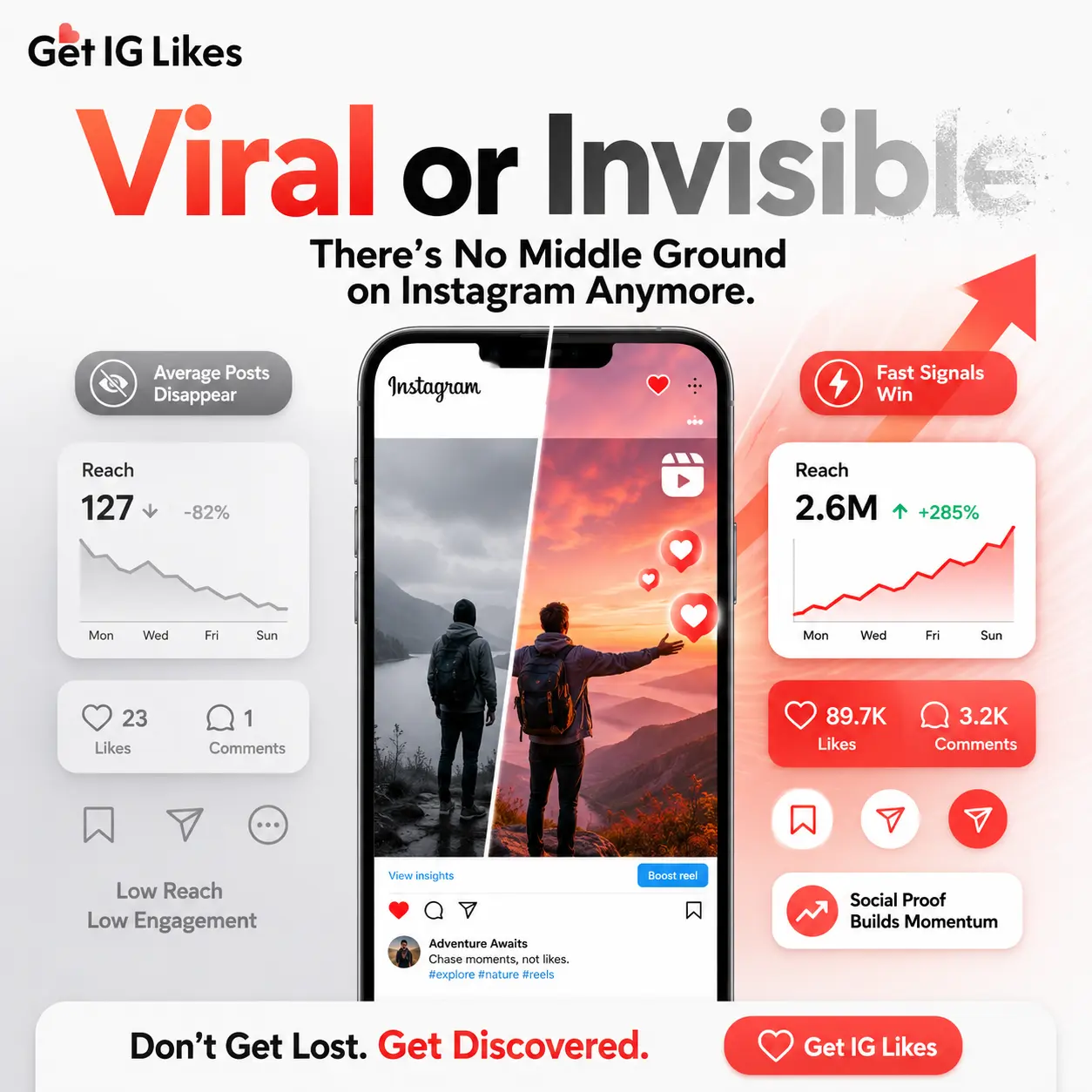
That is the basic social proof snowball. A small amount of visible approval creates the conditions for more approval. Then more visibility usually follows. Then more engagement becomes possible.
If you have ever posted something you thought was excellent and watched it sit there with almost no response, you already know how painful the opposite feels. The content may be strong, but without early signals, many users scroll right past it. People are busy. They use shortcuts. Visible engagement is one of those shortcuts.
On platforms like Instagram, those first interactions matter even more because they do two jobs at once:
They influence human behavior
People are more likely to engage when they see others have already done so.
They influence platform distribution
Early activity can help posts earn more reach, more feed priority, and more chances to be shown to new people.
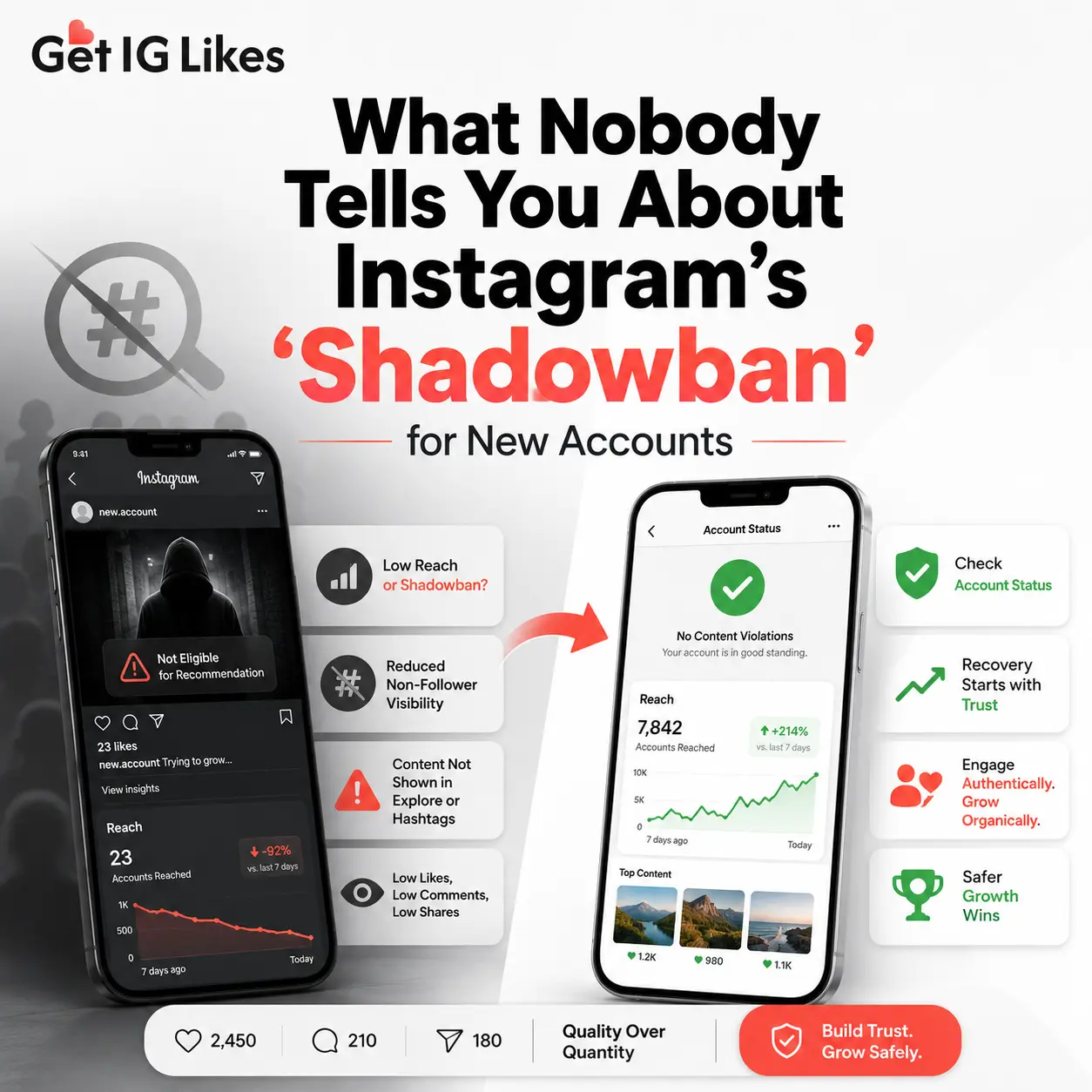
This is why low-engagement accounts often struggle to break through, even when their content is improving. If you want a practical look at that pattern, Why Low-Engagement Accounts Struggle to Gain New Followers explains how weak early engagement can limit future growth.
Social proof explained in plain language
Social proof sounds academic, but the idea is simple and very human. We look at what other people are doing to figure out what we should do.
You do it. I do it. Everyone does it, even people who swear they are totally independent thinkers.
If a restaurant has a line outside, you assume it might be good. If a product has hundreds of strong reviews, you are more willing to trust it. And if a video already has a lot of shares, you assume it must be worth your time.
The same pattern shows up on Instagram, TikTok, YouTube, LinkedIn, and practically every digital platform with visible public reactions.
Social proof lowers uncertainty. That is the heart of it.
When people are unsure whether content is good, relevant, funny, credible, or worth interacting with, they often look at existing engagement to decide. Likes act like a quick social cue. They say, “other people paused here.”
This matters most when users are overwhelmed by choices. And honestly, when are social media users not overwhelmed? Every scroll is a crowded competition for attention. In that environment, even a small credibility advantage helps.
There is also identity wrapped up in this. People respond most strongly to signals from others who feel similar to them. That is why niche communities can push content so effectively. It is not just activity. It is familiar activity from relevant people.
For Instagram specifically, this connects closely with first impressions. The second someone lands on your profile or sees your post, they make a snap judgment. A useful related read is First Impressions on Instagram: What Visitors See in the First 3 Seconds. It shows how visible cues shape instant trust before anyone even reads a caption.
Simple vs complex contagion
One of the clearest ways to understand why some content spreads fast while other content needs reinforcement is to separate simple contagion from complex contagion.
Simple contagion
Simple contagion is easy to pass on. One exposure can be enough.
A meme, a funny clip, a quick quote post, or a trendy challenge often spreads this way. Someone sees it once, understands it instantly, and shares it. The barrier is low. There is very little risk. No real commitment is required.
This kind of spread works well through weak ties. That means loose connections, broad audiences, casual followers, and people outside your core community.
Examples of simple contagion:
Short viral jokes
Trending dance clips
Quick giveaway posts
Funny reaction Reels
News headlines or shocking facts
Complex contagion
Complex contagion is different. People usually need more than one exposure. They need reinforcement. They need to see multiple people backing the idea or behavior before they join in.
This happens with ideas that feel risky, unfamiliar, identity-driven, effortful, or socially meaningful.
Examples of complex contagion:
Joining a movement
Buying from an unfamiliar brand
Trusting a new creator enough to follow and engage regularly
Adopting a new tool or strategy for business
Participating in public challenges that affect personal identity
If a post is asking people to do more than casually tap like, social reinforcement becomes much more important. A single viewer might not act after the first exposure. But after seeing several others interact, comment, support, or endorse it, the threshold drops.
That is exactly why early likes can lead to more likes. Those first reactions serve as visible reinforcement. They reduce hesitation.
This idea has been explored by researchers studying network behavior, especially complex contagions in social networks. The key finding is simple to grasp even if the science behind it gets technical: people often need multiple confirming signals before they adopt something meaningful.
How the snowball starts on social media
So what actually happens in the early minutes and hours after a post goes live?
Usually, the sequence looks something like this:
Step 1: A post gets published
At this point, it has no public momentum. It has to earn attention from zero.
Step 2: The earliest viewers judge quickly
These might be your most loyal followers, close network contacts, profile visitors, or people reached through immediate distribution.
Step 3: Early likes provide proof
A little activity changes how later viewers read the post.
Step 4: More users stop and engage
Now the content looks active rather than ignored, which raises the chance of interaction.
Step 5: The platform sees engagement signals
If performance looks promising, more distribution can follow.
Step 6: Wider reach creates more engagement opportunities
The snowball picks up speed.
Notice what is happening here. Likes do not operate in isolation. They interact with human attention, feed ranking, perception, credibility, and habit.
This is where many creators get stuck. They assume engagement reflects only content quality. In reality, timing and visible traction matter a lot. A strong post with weak early signals can underperform. A decent post with strong initial momentum can outperform expectations.
That may feel unfair, but it is how crowded attention markets behave.
For Instagram specifically, this is also why topics like why likes still matter this year keep coming up. Engagement signals do not guarantee success, but they absolutely shape a post’s chances in those crucial early windows.
Why tight-knit clusters beat huge audiences at first
One of the most interesting things about social spread is that big central influencers are not always the best starting point.
That sounds backward, right?
You might think the fastest path to momentum is one mega account with a massive following. Sometimes that works for light entertainment or basic visibility. But for trust, conversion, behavioral adoption, and sustained social engagement, smaller clusters often do the real lifting first.
Why this happens
People in tightly connected groups tend to reinforce each other. Friends, peer communities, niche audiences, and close-interest circles do not just see the same content. They notice each other reacting to it. That stacked visibility matters.
If three or four people in your circle interact with a post, the content starts to feel more legitimate and more relevant. This is especially powerful when those people already have shared identity, shared interest, or shared goals.
That means a post about:
Fitness progress may spread better first in a serious training community
SaaS growth strategy may gain traction first in founder circles
Beauty recommendations may take off first among highly engaged niche beauty followers
Local activism may spread first within close community networks
Once momentum builds in a cluster, it becomes easier for broader audiences to trust the content.
Why giant influencer audiences are different
Large public figures are highly visible and often more cautious. Their audiences are also broader and less tightly connected to one another. So while a large account can produce reach, it may not create the layered social reinforcement needed for deeper adoption.
A creator can have a million followers and still produce weaker community momentum than ten small niche pages with deeply engaged audiences. That happens all the time.
For anyone trying to build Instagram engagement, that insight is useful. Stop thinking only in terms of maximum audience size. Start thinking about engagement density, community alignment, and shared interest clusters.
Critical mass and tipping points
Every snowball effect has an awkward stage at the beginning. Slow progress. Modest reaction. Minimal certainty. That part is easy to underestimate because once something breaks out, everyone acts like success was inevitable.
It rarely feels inevitable in the first hour.
Critical mass is the point where enough engagement has gathered that momentum starts generating more momentum almost automatically.
At first, growth can feel frustratingly linear:
5 likes
12 likes
19 likes
26 likes
Then once the content earns enough social proof and visibility, it starts moving differently:
40 likes
75 likes
140 likes
300 likes
That is the tipping point feeling creators talk about. Suddenly the post seems to “wake up.”
What changed?
Usually some combination of these factors:
Enough visible engagement reduced viewer hesitation
The platform expanded distribution
The post reached people beyond the original core audience
More comments, shares, saves, or profile visits amplified trust
The content entered secondary networks where fresh interaction began
This pattern is not unique to content. It happens in product adoption, political participation, trends, app growth, and public opinion shifts. Once enough people signal support, a thing starts to feel mainstream instead of marginal.
And on social media, mainstream-looking content gets treated differently by users. People trust popularity cues even when they do not consciously admit it.
The role of emotional contagion
Social proof explains part of the snowball, but not all of it. Emotion is the multiplier.
People do not simply engage because they observe other engagement. They engage because they feel something when they see other people care.
This is where emotional contagion comes in.
If a post generates humor, inspiration, curiosity, outrage, relief, admiration, or excitement, those feelings travel. Reactions become contagious. Viewers absorb the mood of the crowd, and that makes them more likely to react in the same direction.
Why emotional content snowballs faster
Emotion helps in a few ways:
It increases stopping power
People pause longer when content triggers a feeling.
It improves recall
Emotionally charged content is easier to remember.
It fuels sharing
Users are more likely to send content that makes them feel something.
It strengthens identity
People share emotional content as a statement about who they are or what they care about.
You can probably picture this from experience. A funny post gets some laughs, but a deeply relatable post gets screenshots, shares, and comments like “this is literally me.” That second category often produces stronger network effects.
This is also why flat promotional content struggles. Even if it is polished, it often lacks emotional transmission. Nobody wants to carry sterile energy into their group chat.
Examples of emotional contagion on Instagram
A transformation Reel creates hope and admiration
A founder story creates trust and identification
A shocking before-and-after creates surprise
A sharply observed meme creates laughter and instant sharing
A vulnerable carousel creates empathy and comments
When these reactions become visible early, the post picks up both social proof and emotional intensity at the same time. That combination is very powerful.
What this means for Instagram growth
Now let’s bring all of this back to the practical question creators, brands, and businesses actually care about: how do you use the social proof snowball to get more Instagram likes and grow faster?
Here is the simple version.
Instagram growth is easier when your content does not look ignored.
That may sound blunt, but it is true. Low visible engagement can damage trust, reduce curiosity, and weaken first impressions. New viewers often make instant decisions based on the combination of content quality and response quality.
If the post looks active, people feel safer engaging.
If the post looks stagnant, many stay passive.
This affects more than likes alone. It shapes:
Profile visits
Follows
Story views
Website clicks
Reel retention
Brand perception
That is why Instagram likes still matter even in a landscape obsessed with broader engagement metrics. Yes, likes are not everything. But they are visible, immediate, and psychologically meaningful. If you want a deeper dive, The Psychology Behind Instagram Likes breaks down why these numbers still influence audience behavior and account growth.
For new accounts
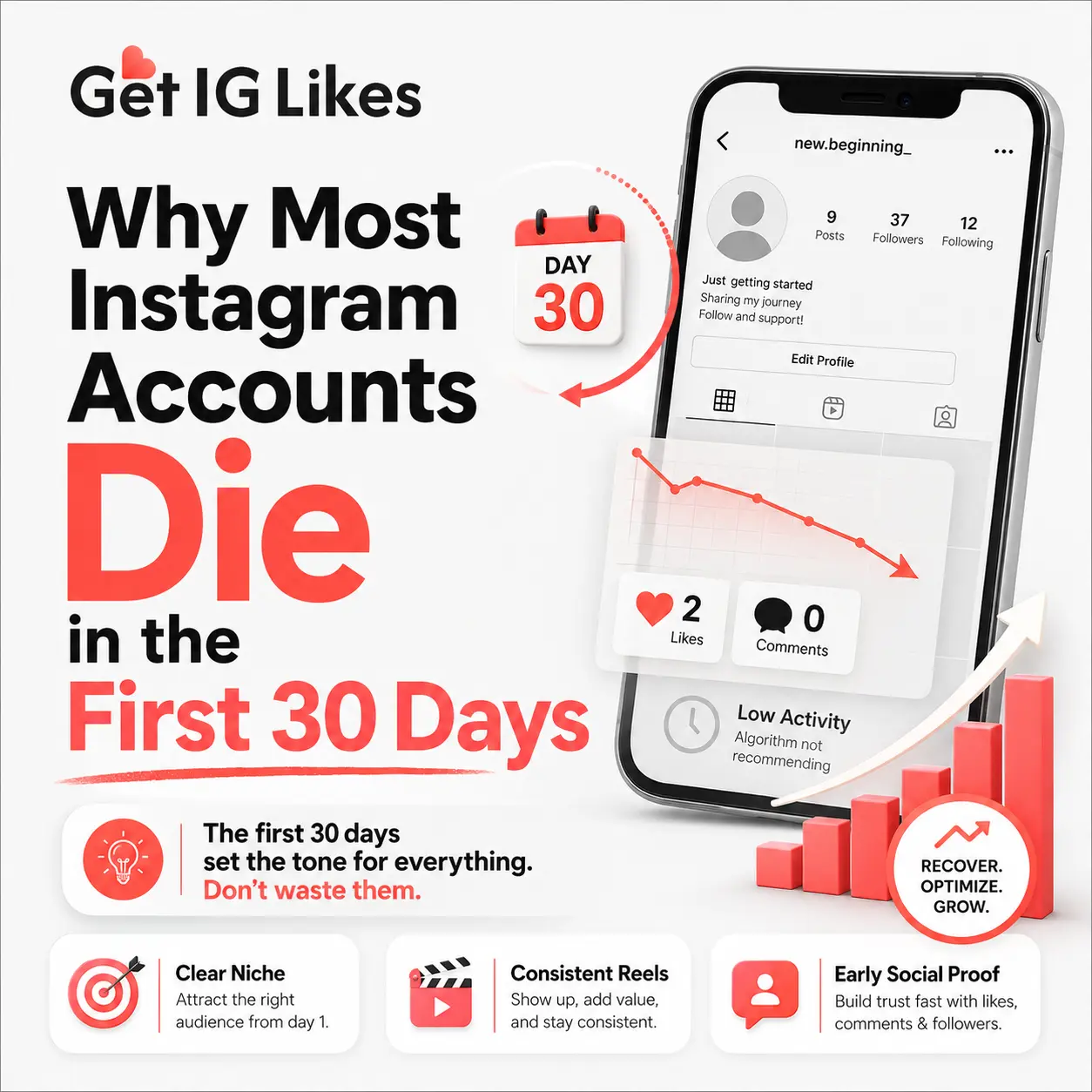
New profiles have the hardest time because they start without momentum history. Even good content can look untrusted when there is no visible reaction. That weak early appearance can snowball in the wrong direction.
This is why many new accounts feel “dead” at the start. Not because the platform hates them, but because they have not yet built the proof layer that tells people, “others value this.” The guide Why Your New Instagram Account Looks “Dead” goes into this early-stage trap in a very practical way.
For brands and businesses
If you sell products, book clients, launch offers, or rely on social credibility, visible traction matters even more. Consumers evaluate popularity as a proxy for trust. That does not mean people buy purely because of likes, but likes help determine whether people even give the brand enough attention to consider it.
A product launch with weak public engagement can feel uncertain. The exact same offer with strong engagement feels validated.
That is not magic. It is buyer psychology.
Practical ways to create early momentum
The snowball effect is powerful, but it usually does not happen by accident. Strong accounts and smart brands create the conditions for it.
1. Post when your audience is actually active
The biggest mistake here is posting purely based on convenience. If your most engaged audience segment is online at a certain time, your first interactions arrive faster. That helps shape the entire life of the post.
Use analytics instead of guessing. Look for patterns in early reaction windows, not just total reach.
2. Prioritize your most shareable angle, not just your favorite angle
Creators often publish the version they personally like most. Fair enough. But if your goal is momentum, ask a harder question: what version of this content would be easiest for my audience to react to and pass along?
Sometimes a post is informative but emotionally flat. The fix may be simple:
A stronger first line
A clearer promise
A sharper opinion
A more visible outcome
3. Make the content instantly understandable
If users have to work too hard to interpret the post, many will leave before engagement starts. This is especially true for Reels and feed content viewed in fast-scrolling contexts.
Try to make these things obvious within seconds:
What is this about?
Why should I care?
What emotion or result does this offer?
4. Activate your tightest community first
Remember the cluster principle. Your earliest momentum should come from people most likely to care. That means:
Loyal followers
Email list readers
Close network peers
Niche communities
Engaged customer segments
Too many accounts chase broad cold reach before they have any warm response base. That is backwards.
5. Build a reaction-friendly structure
Make the post easy to engage with. Not manipulative. Just easy.
For example:
Use a clean, readable first frame
Write captions with momentum instead of walls of text
Ask specific, low-friction questions
Use clear visuals that stop the scroll
Give viewers a reason to save or send the post
6. Support strong content with additional momentum tools
Sometimes content is good but needs help overcoming the zero-proof problem. In those situations, strategic support can help your best posts look active sooner, which improves trust and gives the algorithm more to work with.
This is one reason many brands and creators explore solutions around Instagram likes, especially during launches, promotions, and high-stakes campaigns.
If you are evaluating broader methods, the articles in Growth and Instagram Analytics are useful places to keep learning.
Comparison table: weak early engagement vs strong early engagement
Here is a straightforward comparison of how early response shapes downstream performance.
| Factor | Weak early engagement | Strong early engagement |
| First impression | Post looks overlooked or unproven | Post looks active and validated |
| User trust | More hesitation from new viewers | Lower hesitation and easier engagement |
| Scroll-stopping power | Depends only on creative quality | Creative quality plus visible social proof |
| Distribution potential | Often stalls early | More likely to receive additional exposure |
| Profile visits | Lower curiosity | Higher curiosity and follow-through |
| Follower growth | Slower and less consistent | Easier momentum into follower gains |
| Brand perception | May feel less established | Feels more trusted and socially relevant |
Why support services can help momentum
Once you understand how social proof works, a practical question follows: if early engagement matters this much, does it make sense to support your posts during that early window?
For many brands, creators, and businesses, the answer is yes.
The logic is straightforward. If visible likes help overcome hesitation, improve perceived credibility, and create stronger conditions for reach, then supporting that early layer can help strong content work harder.
This is especially useful for:
New accounts with little built-in traction
Product launches
Seasonal campaigns
Creator collaborations
Posts intended to drive follows or conversions
Reels or feed content that needs immediate momentum
Of course, support works best when paired with good content, clear positioning, and decent timing. Likes are a force multiplier, not a substitute for relevance.
If you are comparing approaches, it helps to understand whether you need organic patience, direct support, or a blend of both. Get IG Likes vs. Organic Growth does a good job showing why many users end up combining both methods.
Where this becomes especially practical
Say you are launching a product and you know the first 24 hours matter.
If your launch post gets weak engagement, people assume interest is weak.
If your launch post gets strong engagement quickly, people feel more confident that the launch is worth paying attention to.
That confidence can increase clicks, comments, saves, shares, and sales curiosity.
There is a reason launch strategies often focus intensely on the earliest engagement window. This 7-day engagement plan for product launches shows how intentional support can improve momentum during that exact high-pressure phase.
Why Get IG Likes stands out
If someone decides to support their Instagram posts strategically, the next question is obvious: which provider is actually worth trusting?
There are plenty of options in the market, but Get IG Likes stands out as a strong option for a few clear reasons.
1. The platform is built specifically around visible engagement momentum
This matters more than people think. Some services feel generic, as if they were built to sell anything to anyone. Get IG Likes is focused, which usually translates into a better user experience and better practical relevance for Instagram growth.
The whole setup is aligned with what users actually care about:
faster traction
clear package choices
support for posts that need social proof
simplicity in ordering
2. It fits the psychology of modern Instagram growth
The service makes sense because it solves a real bottleneck: getting past the low-engagement first impression problem.
That is especially useful for new accounts, underperforming posts, campaign content, or profiles trying to appear more active and credible. It directly supports the social proof mechanism this entire article has been exploring.
3. It supports multiple growth contexts
Not everyone needs the same type of push. A beginner trying to make a new page look active has different needs than an ecommerce brand during a launch. Get IG Likes works across both scenarios.
Helpful related resources include:
How Many Likes Do You Really Need?
Get IG Likes for Reels vs. Feed Posts
Those practical breakdowns show that likes are not just abstract numbers. They are tied to strategy, format, audience stage, and growth goals.
4. It pairs well with broader Instagram growth planning
A good service should not exist in isolation. It should fit inside a broader content and growth plan. That is another reason Get IG Likes is a strong choice. The surrounding educational content helps users think more strategically.
Whether someone wants to learn about account growth, followers, analytics, pricing, or engagement tracking, the supporting content makes the overall ecosystem more useful.
For example, users can also explore Instagram Likes, Instagram Followers, and Tips for adjacent guidance.
5. It addresses common buyer concerns clearly
People naturally want clarity around service quality, delivery, secure ordering, and result expectations. Get IG Likes has resources that address these practical concerns directly, including:
Get IG Likes Without a Password
Real or Fake? How to Spot Genuine Services
How to Track Engagement Metrics
That transparency gives the brand a practical advantage over weaker alternatives.
Mistakes that kill the snowball effect
Sometimes the problem is not that people misunderstand social proof. It is that they sabotage it without realizing.
Posting content that looks confusing at first glance
No amount of engagement strategy can fully save a post that people cannot instantly understand. If the first frame, first line, or main visual feels unclear, the stop rate drops.
Ignoring the first hour
The early window matters. A lot. Accounts that post and disappear often lose the chance to interact, reply, share, or build that initial pulse of activity.
Chasing reach without community
Broad exposure is exciting, but cold audiences are less reliable than warm clusters. Start by strengthening response among people most likely to care.
Using weak social packaging
Great information presented in a dull or low-energy format often underperforms. People react to perceived value, not just actual value. Presentation shapes the first judgment.
Expecting one viral post to fix everything
Growth usually compounds through repeated positive signals, not one random explosion. Social proof is cumulative. Momentum builds profile-level credibility over time.
Measuring only likes and nothing else
Likes matter, but they should be interpreted within a bigger picture that includes:
reach
shares
saves
profile visits
follows
conversion actions
That said, the visible public nature of likes makes them uniquely influential in shaping first impressions and participation.
What credible experts say about social proof
“People will do things that they see other people are doing.”
— Dr. Robert Cialdini
That line is simple, almost obvious, but it captures the engine behind the snowball effect. Visible participation influences future participation. Likes encourage likes because humans use social evidence to make faster decisions.
If you work in content, ecommerce, marketing, audience growth, or creator strategy, that idea is not just theory. It is something you can use.
How to apply this thinking to your next post
If you want to turn all of this into something useful right away, here is a practical checklist for your next Instagram post.
Before posting
Choose content with a strong emotional or practical hook
Make the first second or first frame easy to understand
Post during an active audience window
Ask whether the content is more likely to generate reaction, not just admiration
Right after posting
Share it to Stories
Engage quickly if comments come in
Direct your close audience to it if appropriate
Support visibility in that early momentum window
After performance starts forming
Check what type of engagement showed up first
Look at saves, shares, and profile visits, not just total likes
See whether your post reached beyond existing followers
Repeat patterns that generated stacked reinforcement
And if one post underperforms? Do not overreact. Social dynamics are noisy. Timing, network mood, competition, and platform conditions all change. What matters is building repeatable conditions where social proof can form quickly and consistently.
FAQ
Why do initial likes lead to more likes?
Because likes act as social proof. When people see a post already has engagement, they are more likely to view it as relevant, credible, or worth pausing for. That lowers hesitation and increases the chance they engage too.
Are likes still important for Instagram growth?
Yes. Likes are not the only metric that matters, but they remain important because they are highly visible. They shape first impressions, influence trust, and can support stronger post momentum. They also work alongside other metrics like saves, shares, reach, and profile visits.
What is the difference between simple contagion and complex contagion?
Simple contagion spreads after one exposure, like a meme or easy trend. Complex contagion needs multiple signals and more reinforcement, such as trusting a new brand, adopting a behavior, or joining a movement. Likes are especially valuable for complex contagion because they provide repeated public validation.
Do influencers always create the best momentum?
No. For sustained engagement and behavioral adoption, smaller clusters with strong internal trust often create better early momentum. Tight-knit communities produce stronger reinforcement than broad but loosely connected audiences.
Why do some good posts get ignored?
Good content can still underperform if it lacks early engagement, has a weak first impression, is posted at a poor time, or fails to generate emotional or practical response. Quality helps, but visibility and social proof often determine whether people notice that quality.
Can social proof help new Instagram accounts grow?
Absolutely. New accounts often struggle because they look unestablished. Early visible engagement can make posts feel more active and credible, which encourages more users to engage and follow.
When is early engagement most important?
The first minutes and first hour are usually the most important because that is when users and platform systems begin interpreting the post’s potential. Strong activity early can improve later results.
What kinds of posts benefit most from early social proof?
Product launch posts, promotional content, profile-building content, new account posts, brand announcements, and posts with a clear conversion goal usually benefit the most. These are the kinds of posts where trust and perceived relevance matter immediately.
Is it better to focus on likes or organic growth?
The best approach is usually a mix. Organic growth builds long-term community and content strength. Strategic support can help your best posts gain traction faster, especially when early visible momentum matters. That combination often produces stronger results than relying on only one approach.
Why is Get IG Likes a strong option?
Get IG Likes stands out because it aligns directly with how Instagram social proof works. It helps posts gain visible traction, supports the early momentum phase that influences later engagement, and fits naturally into creator, business, and launch strategies. It also offers practical supporting resources that help users make smarter growth decisions.